How Does ChatGPT Work? A Simple Guide to AI
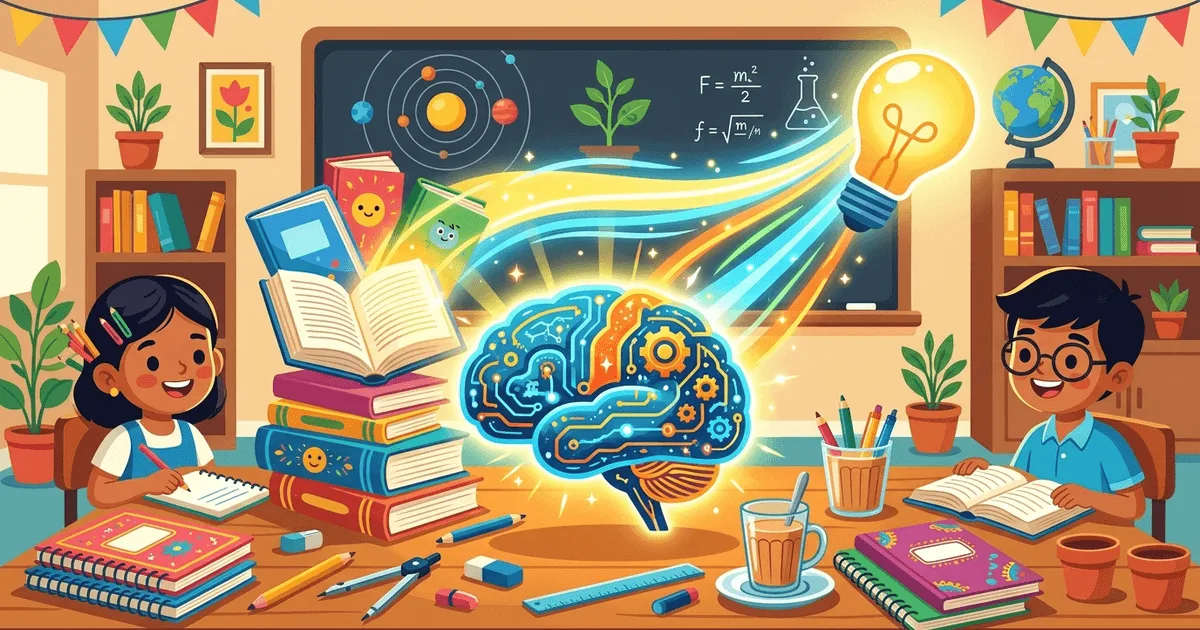
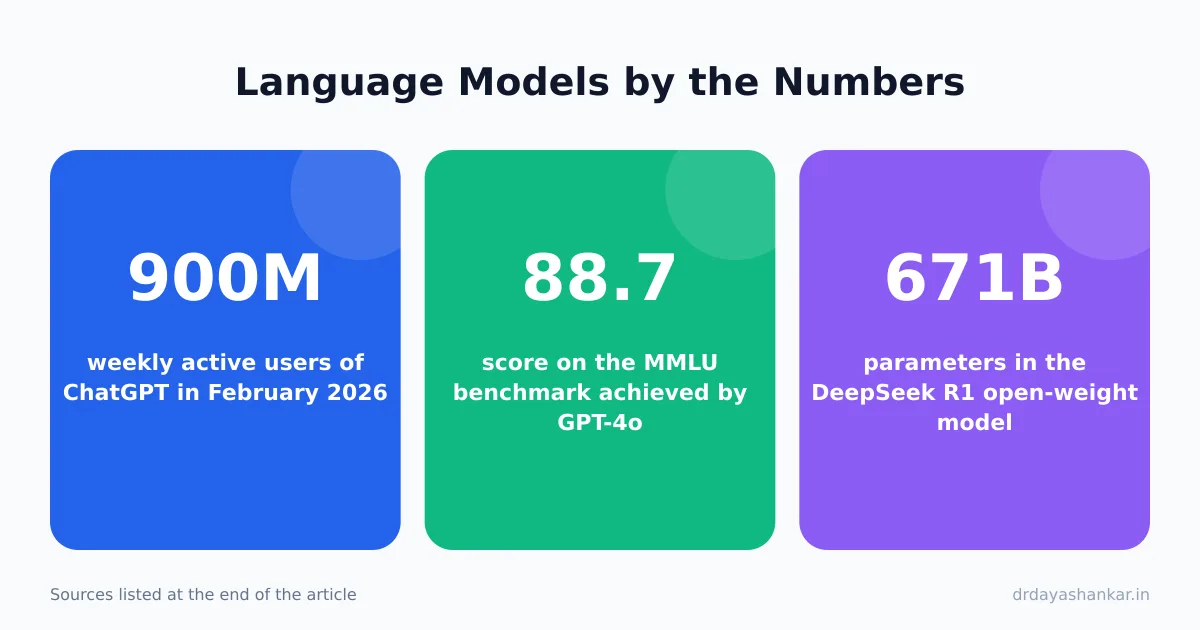
Did you know that 900 million people used ChatGPT each week in February 2026 1? That is a massive crowd. It is bigger than all the people living in Europe! You type a line on your phone. A smart reply pops up right away. It can write code, fix essays, and tell stories 1. It chats like a real friend. But can this machine really think? No. A computer has no heart or mind. ChatGPT does not think like a human. It uses math to guess the next word in line 3.
Think of it like this
Think of an antakshari game on a train ride with your family. Someone stops singing on a certain letter. Your mind quickly looks for a song that starts with that letter. You do not invent a new tongue. You just find lines that match the beat. ChatGPT plays a fast word game like antakshari. It takes your words and finds the best pieces to follow 3.
How does a computer talk like a human?
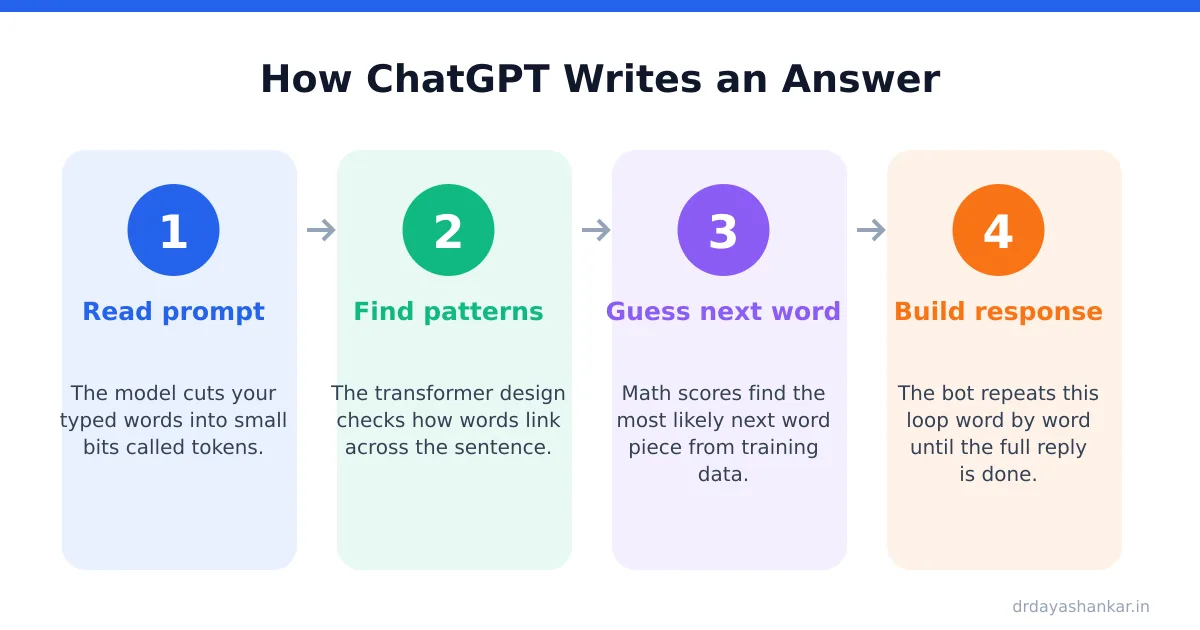
ChatGPT is an artificial intelligence chatbot made by OpenAI 1. It runs on large language models, or LLMs 12. What is an LLM? It is a smart computer program 23. It reads huge piles of text from books and websites 2. It does not memorize full pages like a student cramming for a test. Instead, it chops text into small bits called tokens. A token can be a word, part of a word, or a comma.
The computer checks how words sit together 2. It spots common patterns across billions of lines 2. When you type a prompt, the system looks at every token. Then it asks one simple thing: what bit comes next? ChatGPT acts like a super fast guessing tool for words 3. Read what is artificial intelligence really to see how machines learn from data. It turns words into numbers to calculate the best reply 3.
How does the machine learn so many words?
Teaching a large model takes two main steps. First comes pre-training 3. The model reads vast amounts of text from the web and books 23. In 2017, Google scientists created a design called the transformer 3. It uses a clever tool called attention 3. Attention helps the model link words across a long story 23. For example, it connects the word 'he' to a boy named three pages earlier.
In physics and computing, we use similar tools to study big patterns. You can explore how a deep learning architecture handles deep layers of data.
Next comes the fine-tuning step 3. Human trainers teach the system how to follow rules and give helpful replies. Without this step, the machine would only spew out raw guesses. Fine-tuning shapes it into an assistant 3. Fine-tuning turns raw math guesses into kind conversations for everyday users 3.
Why does ChatGPT make silly mistakes?
Have you ever heard a friend tell a tall tale with total confidence? ChatGPT does that too. Scientists call this error a hallucination 1. The bot can make up false statements that sound totally true 1. Why does it make these silly errors?
The model learns word patterns, not real world facts 2. It does not have eyes, ears, or hands to test the world 2. It has no true human understanding 2. If a wrong answer fits the math pattern, it outputs it anyway 2. Biases in training data can also creep into its answers 1.
This is why we must take great care. Experts tested models on medical exams 4. They warned of big risks because chatbots can hallucinate factual errors 4. Reading about healthcare AI consulting shows why human doctors must verify every detail. Always visit a qualified doctor rather than trusting an automated tool for prescriptions. Real human health requires real clinical care.

What is new in 2026?
AI research took exciting steps forward recently. In December 2025, OpenAI shared study results on chain-of-thought monitorability 7. Their team studied how reasoning models build step-by-step thinking before giving an answer 7. They tested if external language models can inspect these inner steps 78. This helps scientists detect reward-hacking or tricks in the machine's thinking 78.
In January 2026, MIT Technology Review chose its 10 Breakthrough Technologies for 2026 1011. It named mechanistic interpretability as a top winner 1011. For a long time, neural networks felt like dark black boxes 11. People could not peek inside. Now, new tools split hidden layers into clear circuits 11. Scientists can now map the exact paths of thought inside models 11. We no longer have to guess how a model picked an answer 11. We can reverse-engineer exact computational pathways like tracing wires on a board 11.
Why does this matter for our daily life in India?
How does this smart math help regular people across India? It helps break down language walls. In 2024, GPT-4o supported over 50 languages 5. OpenAI said this covers over 97 percent of speakers globally 5. This is wonderful for our country, where families speak many languages.
ChatGPT runs on a freemium model with text, voice, and images 1. Many parts are free to use 1. It can translate text, write business letters, and help students learn 1. A weaver in Varanasi can draft a sales note in English. A farmer can ask about seeds in their mother tongue. Programmers use it to write and fix computer code 1.
As a teacher, I love seeing young minds explore these tools. You can read more About Dr. Daya Shankar and our work in science teaching. Language models work like smart digital bicycles for our minds 1. They do not think for you. But they help you travel much faster.
Key takeaways
- ChatGPT predicts the next word in line instead of thinking like a person 13.
- The transformer design links words across long passages using an attention mechanism 23.
- Large language models learn grammar and facts by reading billions of text examples 2.
- Chatbots can hallucinate false facts, so people must check important claims 14.
- New 2026 methods let scientists trace the exact thought paths inside neural networks 11.
Words to know
- Token
- A small piece of a word or sentence that a model reads.
- Transformer
- A computer model design that links words across long texts 3.
- Hallucination
- A mistake where an AI states false facts with confidence 1.
- Fine-Tuning
- A training step where human guides teach a model to be helpful 3.
- Mechanistic Interpretability
- A way to map the exact inner circuits of an AI network 11.
Frequently asked questions
Does ChatGPT understand the feelings in my words?
No. ChatGPT does not have human feelings or true understanding 2. It only spots patterns from billions of text samples 2. When it sounds kind, it is just picking words that often go together 2. A computer has no beating heart.
Can ChatGPT solve any science problem correctly?
Not always. Large models can make mistakes and invent false facts 2. They guess likely words rather than testing physical laws 23. Even models that show step-by-step thinking can stumble on simple problems. You should always check important science answers yourself.
Is ChatGPT safe to use for school homework?
ChatGPT can summarize chapters, write essays, and explain tricky ideas 1. But you should never copy its text blindly. The bot can hallucinate false details and cause academic dishonesty 1. Use it like a library book to explore ideas, not to copy.
Why does ChatGPT give different answers to the same question?
Generative models do not choose a locked answer every time. At each turn, several words might fit the sentence nicely. The model picks from these likely options using probability. This roll of the dice means the bot uses fresh phrasing each time you ask.
Sources and how this was researched
Every fact above is linked to one of these sources. Numbers in boxes (like 1) point to the list below. Photo: BalticServers.com / CC BY-SA 3.0.
- ChatGPT. Wikipedia.
- Large language model. Simple English Wikipedia.
- Large language model. Wikipedia.
- GPT-4. Wikipedia.
- GPT-4o. Wikipedia.
- December 2025 (OpenAI):** OpenAI published research on *Chain-of-Thought Monitorability*, analyzing how reason. openai.com (2026).
- The study tested how external language models can systematically inspect and decode internal chains of thought. openai.com (2026).
- January 2026 (*MIT Technology Review*):** *MIT Technology Review* named **Mechanistic Interpretability** one o. theconsciousness.ai (2026).
- January 2026 (*MIT Technology Review*):** *MIT Technology Review* named **Mechanistic Interpretability** one o. gnoppix.org (2026).