How Does Healthcare AI Consulting Help Patient Care?
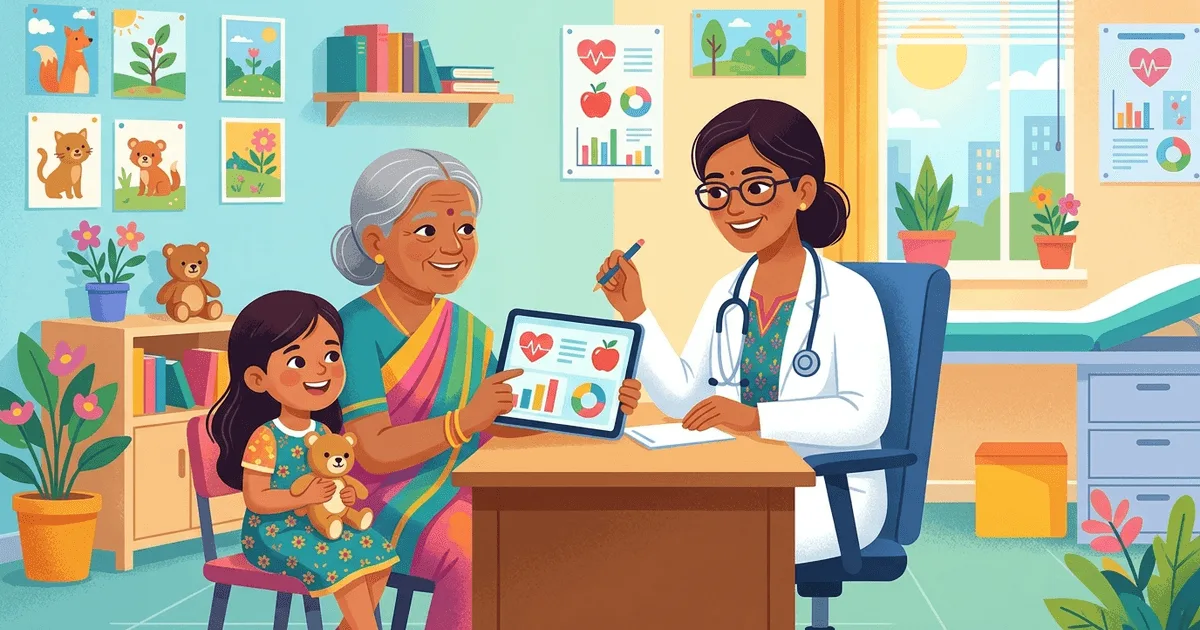
Have you ever visited a busy hospital in India? Long lines snake past the door like queues at a railway station. The doctor checks pulses and writes notes all day long. Heavy clinic paperwork causes deep work stress and burnout 1. In fact, online medical records double in volume every five years 1! In one study, evaluators preferred computer replies over doctor replies to medical questions 1. They chose the computer answers in 78.6 percent of 585 checks 1. Many people liked that the machine sounded gentle and clear. Yet computers do not feel love. Smart computer tools must support doctors, not replace them 4. Hospitals now seek expert advice to adopt these systems safely.
Think of it like this
Think of a cricket match on a warm afternoon. The main umpire watches the ball and the batsman closely. He stands right next to the wooden stumps. When a close run-out happens, he asks the third umpire for help. The third umpire checks slow-motion video screens. The third umpire does not run the cricket match. He only shares clear facts. In the same way, medical software gives extra clues so doctors make safe choices 4.
What can smart computer tools do with health records?
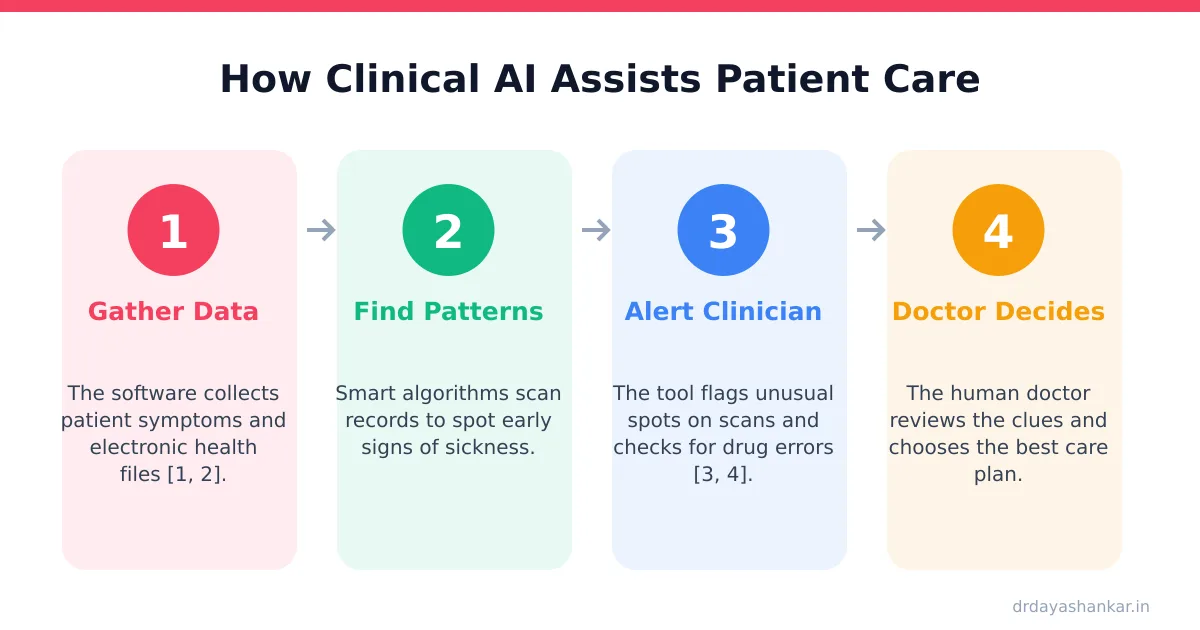
What is artificial intelligence in healthcare? It means using computer rules to study medical data 2. A computer rule is called an algorithm. Think of an algorithm like a clear cooking recipe. The machine follows steps to find helpful answers. Today, patient records grow very fast. Huge data warehouses hold files from hundreds of millions of patients to train AI models 1. No human doctor has time to read that mountain of paper.
Smart computer programs assist by reading digital records quickly 1. They spot hidden patterns and predict disease risks 1. One study showed predictive models reached 70 to 72 percent accuracy in predicting treatment response 1. These systems can also catch dangerous medicine mix-ups before pills reach a sick child. See how computers read messy notes in our guide on handwritten prescription ocr. Smart software helps doctors find patterns and make fewer mistakes 4. These tools save precious time for busy clinic teams [4, 5].
How do computers help doctors look at medical scans?
Imagine searching for a tiny lost key on a dark dirt road. A bright electric torch makes your search simple and quick. Looking through body scans is just as hard for a tired doctor. Smart software brings great help to medical imaging and diagnostic services 3. The computer inspects image pixels just like your phone camera finds faces in a family photo.
These digital tools act like a careful second pair of eyes. Scientists use tooth scans to check how well algorithms spot problems. A 2025 research review showed that AI tools detecting tooth decay are clinically justified 1. The computer marks dark spots on the scan for the dentist to see. Yet the computer cannot treat a tooth on its own. Even with smart software, safe medical care still needs human doctor expertise 4. Working with algorithms helps clinical teams improve accuracy, lower costs, and save hours [4, 5]. This careful teamwork makes hospital visits safer for every child and parent.
Why do hospitals need healthcare ai consulting?
Why cannot a clinic just install any free app and use it on patients? Medical care carries very high stakes. A broken program can lead to wrong diagnoses or harmful errors 6. Some computer models even show unfair algorithmic bias against certain groups of patients 6. Also, private patient records must stay safe from data leaks [5, 6]. Bringing new software into daily clinic work creates complex legal, technical, and ethical challenges [3, 4].
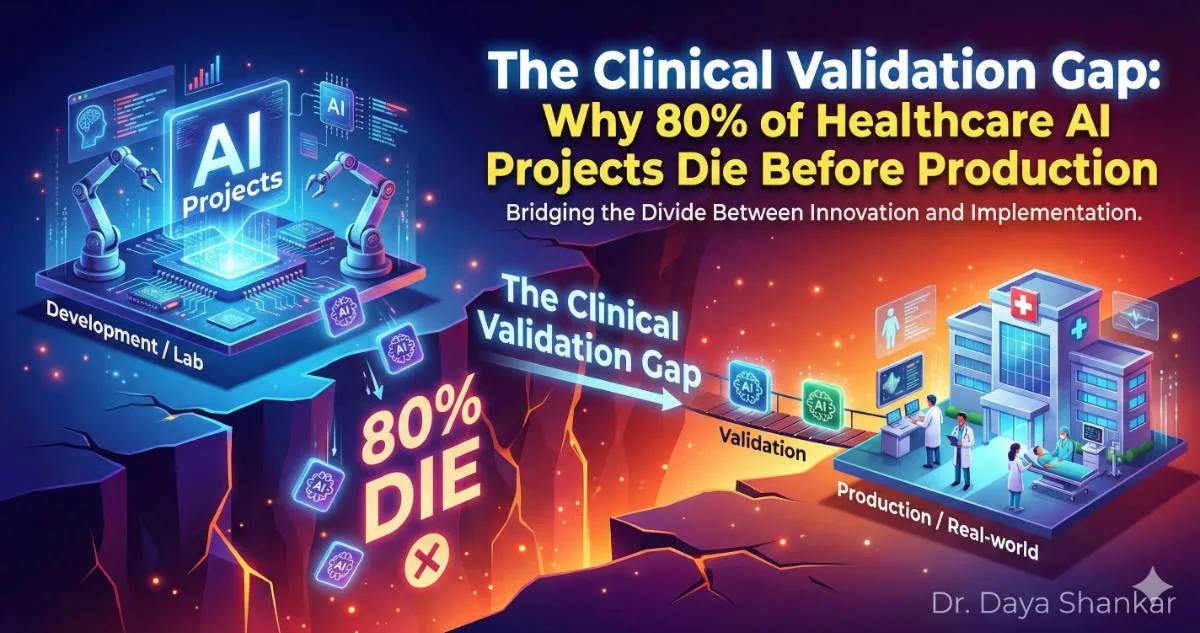
This is why healthcare ai consulting is so important for modern clinics. Moving AI tools into daily medical practice is hard work 7. Clinician trust is a key catalyst for staff to adopt new software 7. To see why untested tools fail in real clinics, explore the healthcare ai validation gap. A strong governance framework acts as a vital tool to solve adoption barriers 7. Consulting helps hospital leaders establish safety rules and audit algorithms for bias [6, 7]. This careful guidance protects patient lives every day.
What is new in 2026 with clinical AI tools?
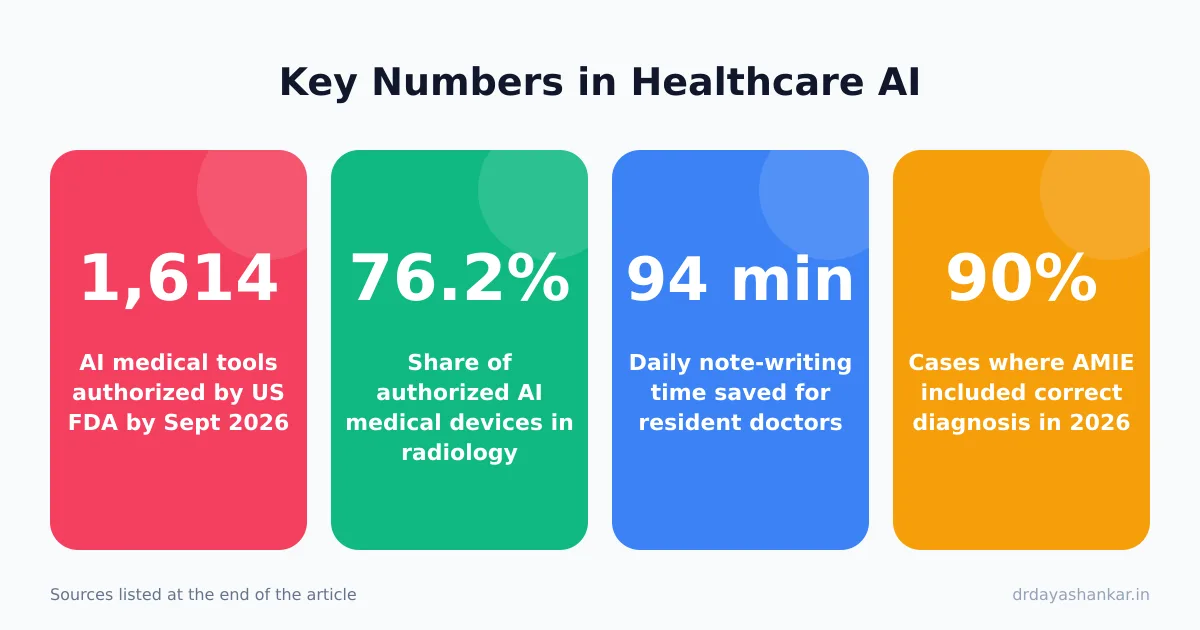
The year 2026 brought exciting news for clinical artificial intelligence. In April 2026, researchers published a large study in the medical journal JAMA 12. They analyzed ambient AI scribes across more than 8,500 clinicians in routine practice 12. An ambient scribe works like a smart listening helper that writes down visit notes automatically. The study showed this software saved primary care doctors an average of 25 minutes of electronic health record documentation each day 12. It saved resident physicians up to 94 minutes per day 12!
Government regulators also marked a major milestone in 2026. In September 2026, the United States Food and Drug Administration released an updated registry 10. It showed 1,614 AI-enabled medical devices authorized for clinical use 10. Radiology tools made up 76.2 percent of all authorizations [10, 11]. In October 2026, a clinical trial tested the AMIE AI tool across 98 patient visits 8. Monitored by doctors, the tool triggered zero safety stops 9. AMIE's suggested diagnosis list contained the correct diagnosis in 90 percent of cases 9.
Why does smart hospital software matter for India?
In India, government hospital corridors stay full from morning until night. Waiting rooms look like busy railway stations during Diwali festivals. A doctor may see sixty patients in a single morning without sipping hot chai. When doctors must write long notes by hand, exhaustion grows fast. Patients must wait for hours in hot rooms just for a two-minute checkup.
Smart computer tools can bring real relief to this heavy load. AI systems assist with virtual patient care, scan checks, and documentation tasks [1, 3]. You can read more in our article on solving india doctor patient ratio ai. Using smart AI tools to draft clinic notes helps doctors lower paperwork stress and avoid burnout 1. When clinics establish clear governance rules, health workers learn to trust these tools 7. Trust allows nurses and doctors to welcome helpful software into daily work 7. This steady teamwork helps Indian families get kind, fast, and safe care. Good care brings healthier children and happier homes across our country.
Key takeaways
- Artificial intelligence reviews medical records to help doctors diagnose diseases and plan treatments [1, 2].
- A 2025 research review showed that AI tools detecting tooth decay are clinically justified 1.
- Healthcare AI consulting helps hospital teams build safety rules to solve adoption barriers 7.
- In April 2026, ambient AI tools saved primary care doctors 25 minutes of typing daily 12.
- Clinical AI systems must protect patient privacy, reduce bias, and support human medical expertise [4, 5].
Words to know
- Artificial Intelligence
- Smart computer programs that study medical data to help doctors make decisions [1, 2].
- Electronic Health Record
- A private digital file that stores a patient's medical history and clinic visits 1.
- Healthcare AI Consulting
- Expert guidance that helps hospitals adopt smart software safely and follow health regulations 7.
- Differential Diagnosis
- A list of possible diseases that could cause a patient's symptoms [8, 9].
- Algorithmic Bias
- Unfair computer errors that can cause unequal medical care for certain patient groups 6.
Frequently asked questions
Can artificial intelligence replace my family doctor?
No, artificial intelligence cannot replace your doctor. True healing needs human warmth, physical touch, and listening ears. Smart computer tools assist clinicians with disease diagnosis and treatment options 4. Human medical expertise is always needed to make safe choices for patient care 4.
Why do hospitals need healthcare ai consulting?
Bringing new computer tools into hospital care involves real technical, ethical, and legal hurdles [3, 7]. Clinician trust is a vital spark for adoption 7. Expert consulting helps medical leaders build governance rules, protect patient data privacy, and audit algorithms so they treat every person fairly [6, 7].
How is private patient data kept safe from leaks?
Protecting private health files is a key ethical and legal duty for every hospital [1, 6]. AI tools bring real concerns about data confidentiality [4, 5]. Hospitals solve this by following strict government rules and creating strong governance frameworks that stop data leaks and guard patient trust [6, 7].
How does AI software help reduce doctor burnout?
Doctors spend hours every day typing notes, which can cause heavy work stress and tiredness. Generative AI tools help by transcribing clinic visits and drafting documentation 1. In April 2026, ambient AI scribes saved primary care doctors an average of 25 minutes of typing each day 12.
Sources and how this was researched
Every fact above is linked to one of these sources. Numbers in boxes (like 1) point to the list below.
- Artificial intelligence in healthcare. Wikipedia.
- Artificial intelligence in healthcare. Simple English Wikipedia.
- Ahmed Al Kuwaiti, Khalid Nazer, Abdullah H. Alreedy et al.. A Review of the Role of Artificial Intelligence in Healthcare. Journal of Personalized Medicine (2023).
- Shuroug A. Alowais, Sahar S. Alghamdi, Nada Alsuhebany et al.. Revolutionizing healthcare: the role of artificial intelligence in clinical practice. BMC Medical Education (2023).
- Daiju Ueda, Taichi Kakinuma, Shohei Fujita et al.. Fairness of artificial intelligence in healthcare: review and recommendations. Japanese Journal of Radiology (2023).
- Barriers to and Facilitators of Artificial Intelligence Adoption in Health Care: Scoping Review.. JMIR human factors (2024).
- October 2026 – First Prospective Clinical Trial of Patient-Facing Diagnostic AI (*The Lancet* / Beth Israel De. harvard.edu (2026).
- Monitored by supervising physicians, the AI triggered **0** safety stops, and AMIE's suggested differential di. hcitexpert.com (2026).
- September 2026 – Regulatory Milestone for Clinical AI Devices (U.S.. complizen.ai (2026).
- April 2026 – Large-Scale Evidence on Ambient AI Documentation (*JAMA* / UCSF Consortium):** A multisite study . apple.com (2026).