How Does a Refrigerator Work to Keep Food Cold?
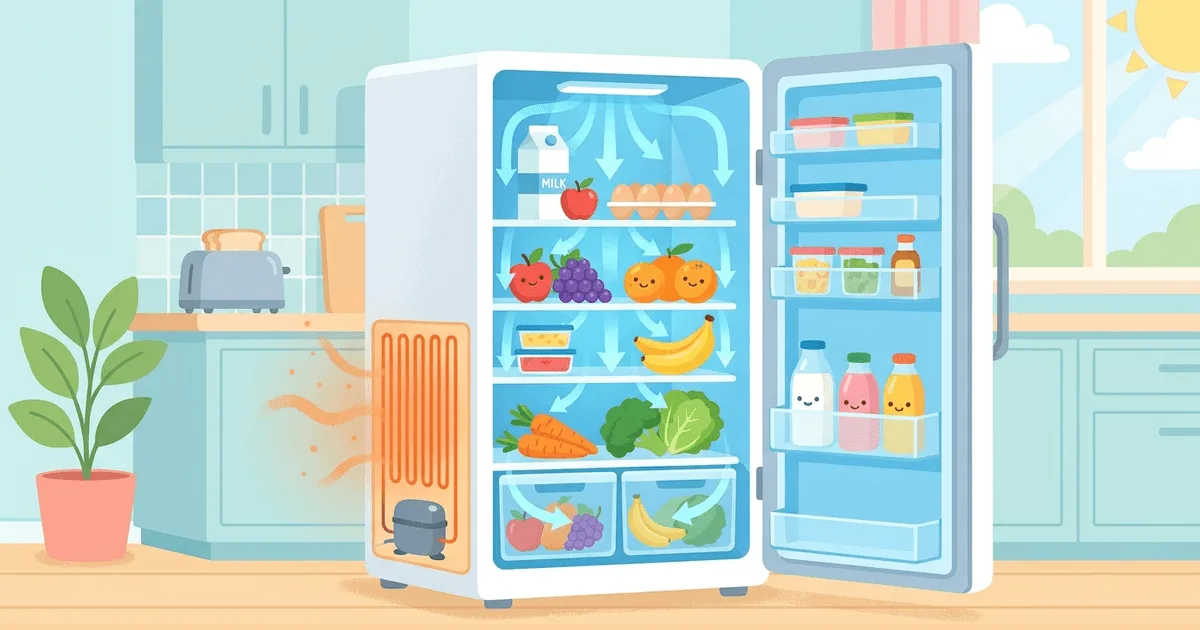
Have you ever touched the back of your fridge on a hot day? It feels very warm to your hand. Many people think a home fridge makes cold air. Here is a neat surprise from science: your fridge does not make cold at all 1. In physics, cold is simply the absence of heat. A home fridge cools food by taking heat away from it 1. Think of it like a quiet heat thief at work. The machine traps warmth from your food 1. Then, it pumps that warmth outside into your kitchen 1, 4. The fridge simply removes heat 1.
Think of it like this
Think of your fridge like a sponge in a leaky boat. Monsoon rain pours in on the floor. You cannot push puddle water away with your bare hands. Instead, you drop a dry sponge into the puddle. The sponge drinks up the water fast. Next, you lift the wet sponge and squeeze it over the rail. A special liquid in your fridge does this same job. It drinks heat from food and squeezes it outside 3, 4.
Does a fridge really create cold air from nothing?
Many people think a home fridge blows icy air like a winter wind. But that is not how nature works. In physics, heat always moves on its own from warm things to cold things 3. Picture a hot cup of masala chai on your table. Heat flows quickly from the hot chai into cooler room air. But heat never moves backward on its own 3. Cool room air cannot make hot chai hotter.
To move heat backward, you must supply extra energy 3, 4. It is like pumping river water uphill against gravity 4. A refrigerator uses an electric heat pump to do this hard work 1, 2, 4. Without added power, heat stays trapped inside the box 3, 4. The pump pulls heat from inside the cabinet 1, 4. Next, it dumps that heat into your kitchen 1, 3. Food safety rules recommend keeping fridges at or below 4 °C 1. This cooling follows clear laws of nature, just like how car engine works science.
How do four simple parts pump the heat out?
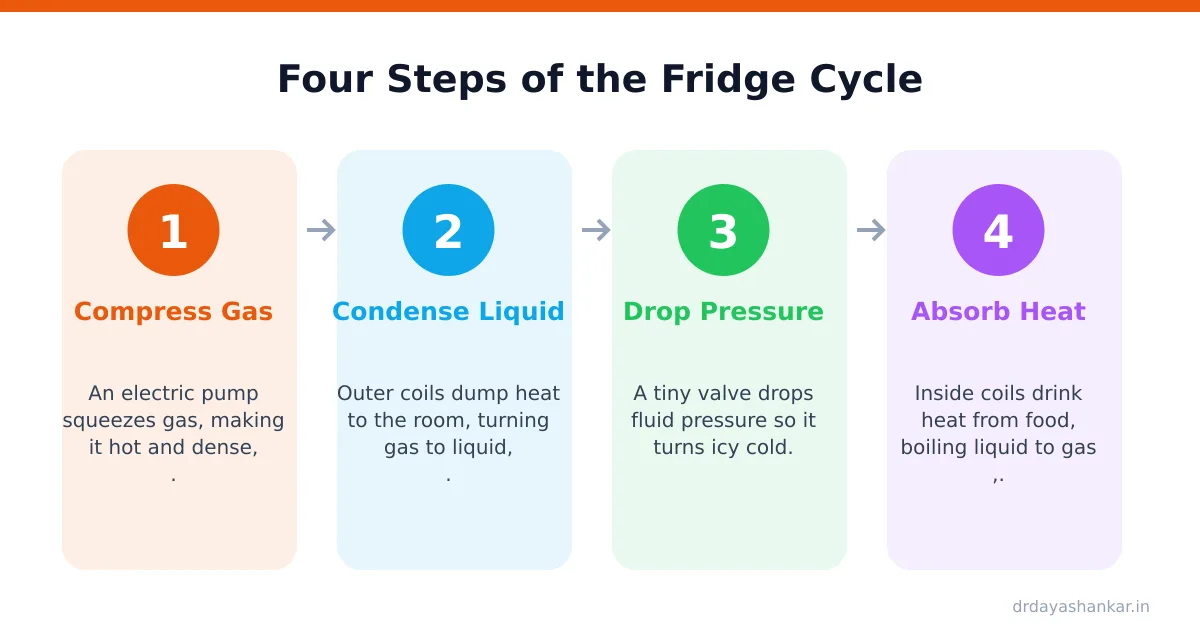
Do you wonder how this happens? Your fridge moves a fluid through a closed loop of metal pipes 3, 4. This working fluid is called a refrigerant 4. It shifts between a liquid and a gas to carry warmth away 4. As it flows, it traps heat and moves it outside 3, 4. Four basic parts work together in this continuous loop 3.
First, an electric compressor squashes cool vapor into a hot, high-pressure gas 2, 3. Second, this hot gas flows through outer condenser coils 3. These coils release heat into your room, turning the gas into liquid 3, 4. Third, an expansion valve pushes liquid through a tiny hole 3. The pressure drops fast, making the liquid turn icy cold 3. Fourth, cold fluid passes through evaporator coils inside the cabinet 3. Here, it drinks heat from food and boils into gas 3, 4. Then the gas returns to the compressor 3. This four-part loop explains how refrigerator works 3. Jacob Perkins built the first working vapor-compression cooling system in 1834 1.
Did Albert Einstein really invent a fridge without a motor?
Did you know great physicists also worked on home tools? In 1926, Albert Einstein and his student Leó Szilárd read sad news from Berlin 5. A family died when a fridge seal broke and leaked toxic fumes 5. Early cooling units used poisonous gases like ammonia. Einstein and Szilárd wanted to build a much safer home machine 5.
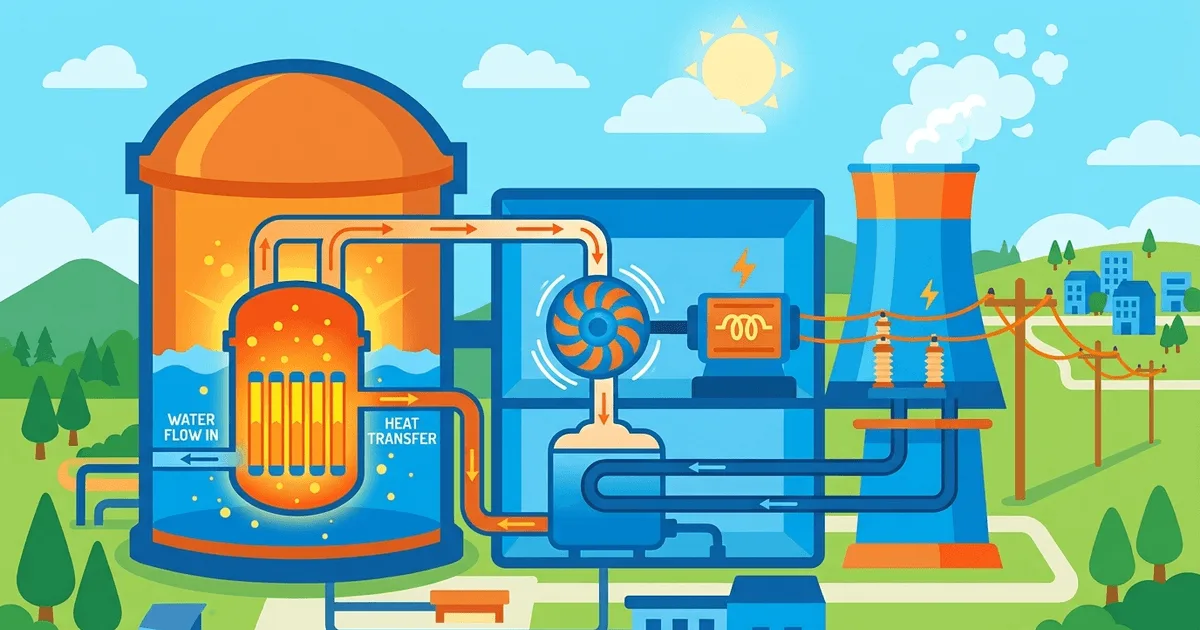
Together, they designed an absorption refrigerator that had no moving parts 5. Because it had no motor, it had no seals that could tear and leak 5. Their design ran at constant pressure using water, ammonia, and butane 5. On November 11, 1930, they received U.S. Patent 1,781,541 for their idea 5. It needed only a heat source to run 5. This design ran without shaking and was built to be very dependable. Years later, an electromagnetic pump from their work helped cool nuclear reactors 5. That reliable setup connects directly with how nuclear power plant works safely without leaks 5. It shows how physics can solve everyday danger 5.
What is new in 2026 for cooling science?
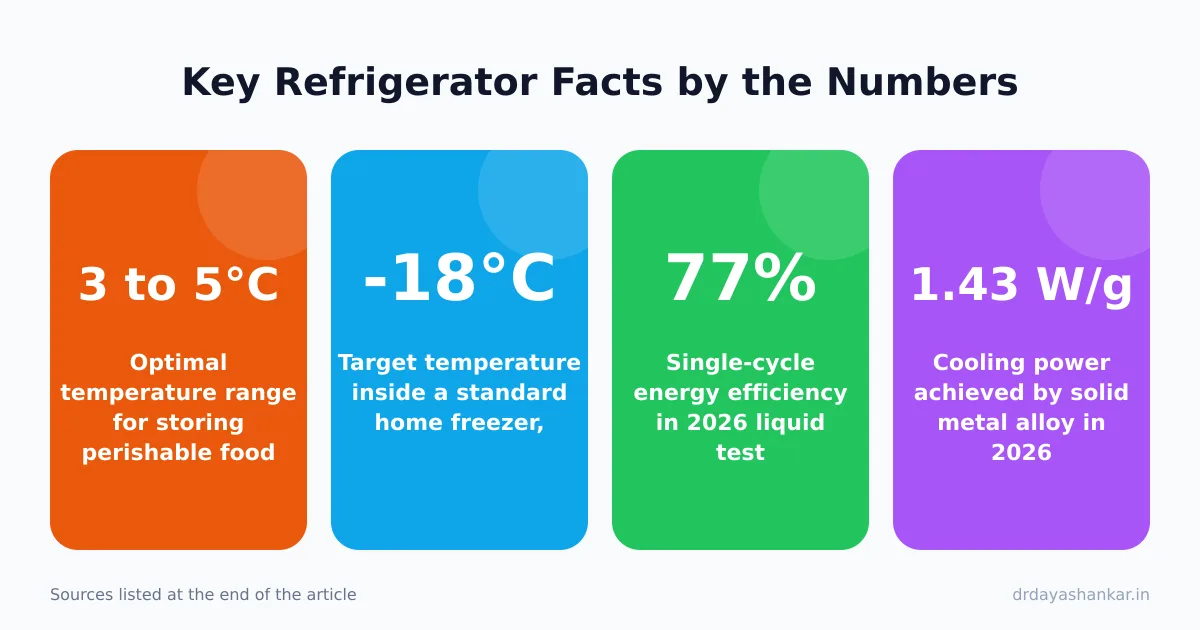
Cooling science made two huge leaps forward in early 2026. In January 2026, Professor Sun Qingping's team at HKUST shared big news in Nature 6. They built the world's first sub-zero elastocaloric cooling device 6. It operates without any traditional gas refrigerants 6, 7. The device uses nickel-titanium shape memory alloys with cyclic phase changes 7. It achieved a sub-zero temperature of −12 °C 7. It created a temperature lift of 36 °C 7. Its cooling power reached 1.43 watts per gram 7.
Also in January 2026, Professor Li Bing's team showed another breakthrough in Nature 8, 9. They tested a dissolution barocaloric cooling cycle at the Chinese Academy of Sciences 8. Their setup used an ammonium thiocyanate salt and water solution 8, 10. They united the refrigerant and heat fluid into a single liquid 8. This smart design removed interface thermal resistance 8. The system showed heat absorption of 67 joules per gram 8. It reached a single-cycle energy efficiency of up to 77% 8.
Why does reliable cooling matter so much across India?
Does your home fridge run all day during May? Across India, keeping food fresh is vital during hot summer months. In warm weather, tiny germs grow fast on cooked dal and fresh milk. A kitchen fridge maintains a temperature between 3 and 5 °C 1. That chill slows down bacteria so your food stays good to eat 1, 2. Meanwhile, home freezers hold food at −18 °C 1, 2. This deep cold lets families store food safely for a long time 1, 2.
Long ago, ancient people stored winter ice in desert structures called yakhchāls 1. Today, modern appliances keep our everyday food cold and fresh in Indian kitchens. A standard domestic fridge uses a fixed-speed compressor to pump heat 3. It also uses a fixed-aperture expansion valve to drop fluid pressure 3. This closed loop protects your curd, milk, and household groceries. It helps families avoid wasting food during harsh summer afternoons. Explaining how physics protects our daily health is a core passion for Dr. Daya Shankar Tiwari. Reliable cold storage helps keep our meals wholesome and fresh.
Key takeaways
- A refrigerator does not create cold; it removes heat from the inside 1, 4.
- A fridge cooling cycle changes fluid back and forth between liquid and gas 3, 4.
- Perishable food stores best between 3 and 5 °C, while freezers stay at −18 °C 1, 2.
- Albert Einstein patented a safe home refrigerator with no moving parts in 1930 5.
- New 2026 breakthroughs cool materials using solid metal alloys and salt solutions 6, 8.
Words to know
- Refrigerant
- A special fluid that shifts between liquid and gas to carry heat 3, 4.
- Compressor
- An electric pump that squeezes cool vapor into a hot, high-pressure gas 2, 3.
- Condenser
- Outer metal coils that release absorbed heat into surrounding kitchen air 3, 4.
- Expansion Valve
- A narrow opening that suddenly drops fluid pressure to make it cold 3.
- Evaporator
- Inner coils where cold liquid absorbs food heat and boils into vapor 3, 4.
Frequently asked questions
Why is the back of my refrigerator warm?
A refrigerator draws warmth from your food and releases it into your kitchen 1, 4. Hot gas flows through outer condenser coils and dumps heat into room air 3, 4. The gas cools into a liquid, leaving the coils warm to your touch 3. That warmth was pulled straight out from your food and drinks inside.
Can I cool my room by leaving the fridge door open?
No, leaving the fridge door open will actually warm your room! A refrigerator moves heat from inside the box out into the room 1, 3. Because the electric motor consumes energy to run, it generates extra heat 2, 4. All that added heat escapes right into your kitchen air 3.
What temperature should my household fridge be set to?
You should keep your refrigerator between 3 and 5 °C, or at or below 4 °C 1. This cold environment slows down bacterial reproduction so your fresh groceries stay safe 1, 2. You should set a home freezer to −18 °C for safe long-term food preservation 1, 2. This extreme chill keeps food safe for a very long duration.
How did Albert Einstein's refrigerator work?
Albert Einstein and Leó Szilárd designed a cooling unit that had no moving parts 5. It operated under constant pressure using water, ammonia, and butane 5. It needed only a small heat source to function 5. This smart setup avoided mechanical pump seal failures that caused deadly gas leaks 5.
Sources and how this was researched
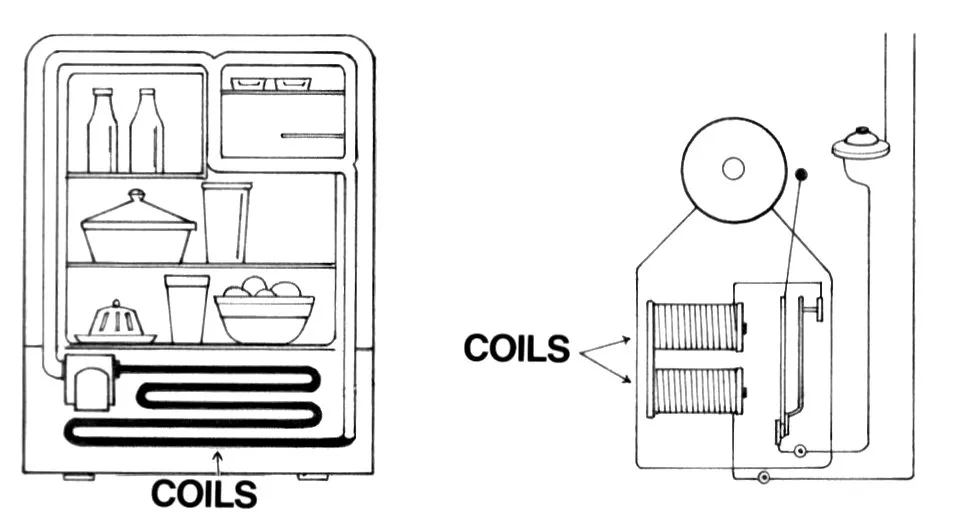
Every fact above is linked to one of these sources. Numbers in boxes (like 1) point to the list below. Photo: Pearson Scott Foresman / Public domain.
- Refrigerator. Wikipedia.
- Refrigerator. Simple English Wikipedia.
- Heat pump and refrigeration cycle. Wikipedia.
- Heat pump. Simple English Wikipedia.
- Einstein refrigerator. Wikipedia.
- January 2026 – Sub-Zero Solid-State Elastocaloric Freezing Breakthrough (*Nature*):** Researchers at the Hong . eurekalert.org (2026).
- Eliminating traditional gaseous refrigerants by using cyclic phase changes in low-transition-temperature nicke. refindustry.com (2026).
- January 2026 – Dissolution Barocaloric Refrigeration Cycle (*Nature*):** A team from the Chinese Academy of Sc. cas.cn (2026).
- January 2026 – Dissolution Barocaloric Refrigeration Cycle (*Nature*):** A team from the Chinese Academy of Sc. iifiir.org (2026).
- January 2026 – Dissolution Barocaloric Refrigeration Cycle (*Nature*):** A team from the Chinese Academy of Sc. nsfc.gov.cn (2026).