Is Nuclear Power Safe for Our Clean Future?
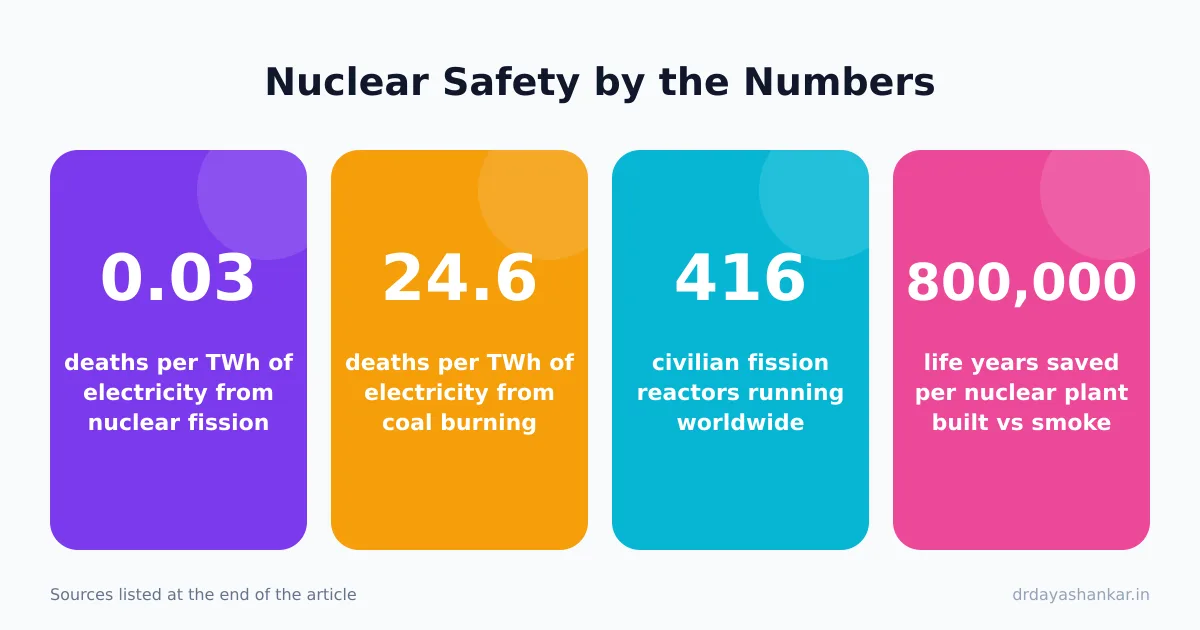
Which power source keeps our homes safest? Many people fear atomic energy. We cannot see, smell, or taste radiation. Radiation means tiny waves of energy that move through the air. Yet real data tells a surprising story 11. In June 2026, energy scientists studied deaths from power stations across the world 11. Coal smoke causes 24.6 deaths for every terawatt-hour of electricity 11. Gas causes 2.82 deaths 11. Nuclear fission causes only 0.03 deaths for that same power 11. That tiny number counts past accidents too 11. Have you ever stopped to wonder why? So, is nuclear power safe for our growing families? Let us look at the clear facts.
Think of it like this
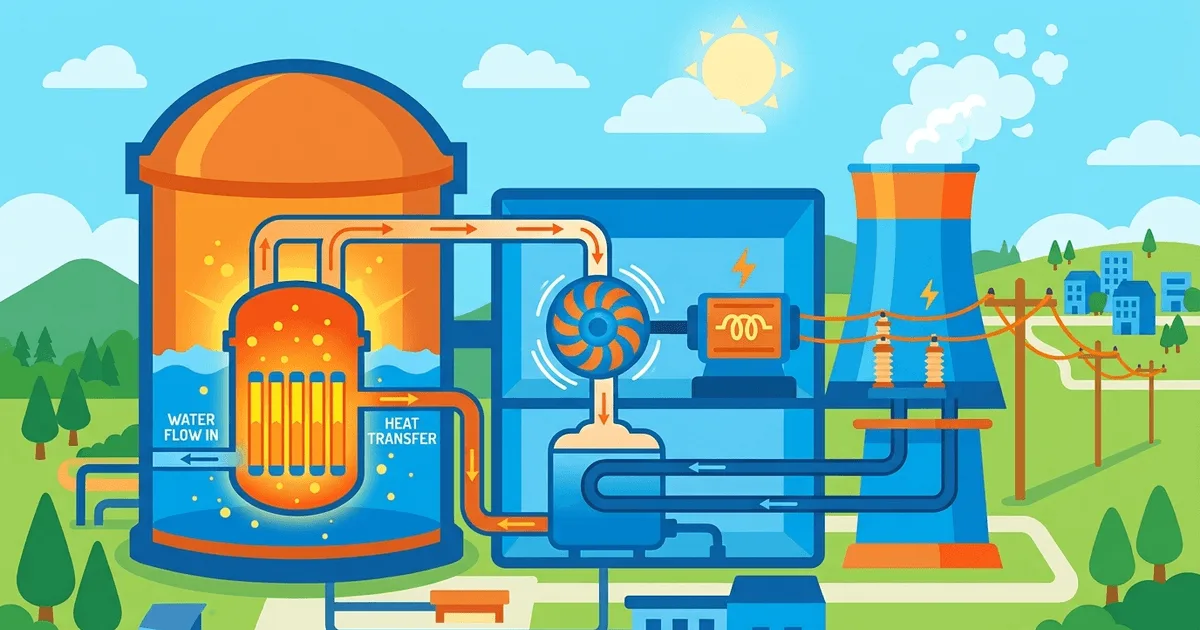
Think of a nuclear reactor as a kitchen pressure cooker. Inside the cooker, water heats up fast. Boiling water makes hot steam. The steam cooks your evening dal quickly and evenly. A thick metal lid holds the high pressure inside. A safety weight lifts if pressure gets too high. In a similar way, reactors use thick walls and relief valves to hold heat and steam safely every single day.
How does a nuclear power plant work?
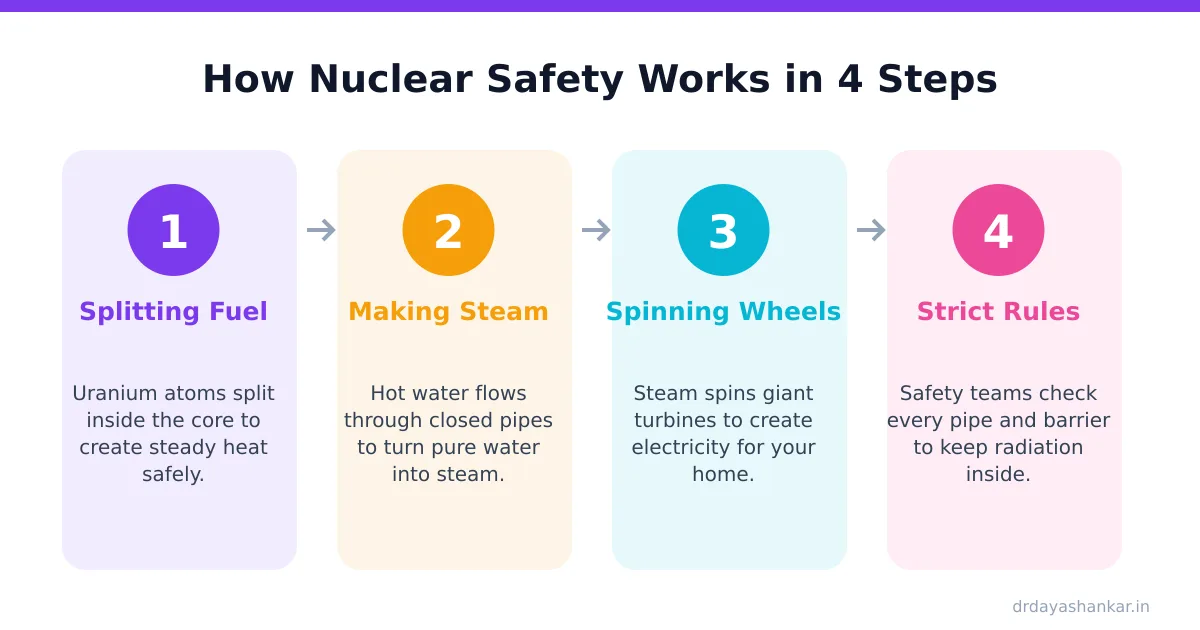
All matter is made of tiny bits called atoms. In a plant, fuel atoms like uranium split apart 2. This splitting is called nuclear fission 2. Think of hitting a carrom coin with a striker. The coin strikes another piece, and energy moves across the board. In a reactor, splitting atoms makes heat. That heat warms clean water inside closed pipes. Hot water turns into rushing steam. The rushing steam spins a giant wheel called a turbine. Then, the turbine runs a generator to make electricity for our homes. You can read our guide on how nuclear power plant works.
Nuclear safety means protecting people and nature from radiation hazards 1. An international group called the IAEA sets global safety rules 1. Engineers put multiple thick walls and metal shields around the fuel. They also make newer and safer reactor designs 1. Still, perfect safety cannot be promised 1. Human mistakes or sudden storms can cause trouble 1. Because of this, operating teams watch every gauge with constant care.
How safe is atomic power compared to coal?
Many people feel nervous about nuclear power plants. Why do so many people fear reactors? Fear often grows when risks feel unfamiliar. Yet burning coal or oil does far more harm to human health 2. Coal stations pour dark soot into the open sky 2. People breathe this dirty air into their lungs every day. Breathing this fine soot causes heavy coughs, bad lungs, and heart trouble. In fact, building each nuclear plant could have saved 800,000 life years by averting smoke from fossil fuels 2.
Nuclear power stations do not burn fuel to make electricity 2. They emit no greenhouse gases during energy generation 2. In June 2026, researchers studied death rates from power sources across modern history 11. Coal burning caused 24.6 deaths for each terawatt-hour of power 11. Natural gas caused 2.82 deaths 11. But nuclear fission caused only 0.03 deaths for that same electricity 11. That makes nuclear fission one of the safest power options known 11. It saves countless lives by keeping our air clean 2.
What happened in past accidents like Chernobyl and Fukushima?
Past plant accidents taught scientists painful lessons. In April 1986, reactor four at Chernobyl exploded 4, 6. The Soviet plant used an unusual design called RBMK 4. It put low cost ahead of strong safety 4. Builders also used poor materials and rushed their work 4. The blast forced 30 kilometres around the site to be cleared 6. The accident showed that global safety rules must never be ignored 1.
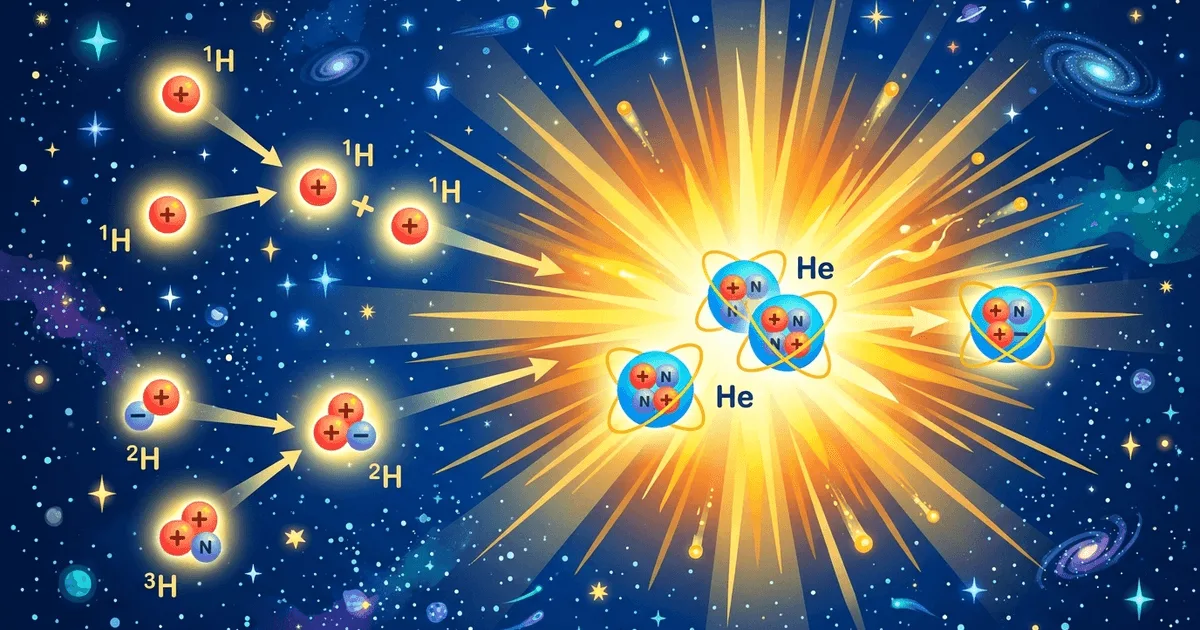
In March 2011, a huge earthquake and tsunami hit Fukushima in Japan 3, 5. The reactors shut down on their own when shaking started 3. But a giant sea wave flooded the plant basements 3. The water broke the backup diesel engines 3. Reactors make decay heat even after they stop 3. Water pumps must keep flowing to cool them down 3. Plant builders did not expect a sea wave to break backup power systems 1. Over 140,000 people had to leave their homes 5. Curious about new power ideas? Read our nuclear fusion explained simple guide.
What is new in 2026 for reactor safety?
What do recent findings show about atomic energy? In December 2025, 350 international participants gathered in Berlin for the SafeND symposium held by BASE 10. Scientists presented updated rock models for high-level nuclear waste 10. These models show deep crystalline-rock repositories isolate waste safely for over 100,000 years without radioactive leaching 10. Deep underground rock layers can trap waste until it loses harmful strength 10. This gives engineers a clear, proven way to handle spent fuel over long horizons 10.
More landmark safety data arrived in June 2026 11. Updated peer-reviewed research showed that nuclear fission causes only 0.03 deaths per terawatt-hour of electricity 11. This number even factors in the fallout from Chernobyl and Fukushima 11. In comparison, coal burning causes 24.6 deaths per terawatt-hour 11. Natural gas causes 2.82 deaths per terawatt-hour 11. This global review confirms that nuclear power remains one of the safest power sources in human history 11. Can clean energy keep our grids dependable? Yes, modern reactors run day and night while protecting human life.
Why does atomic safety matter for life in India?
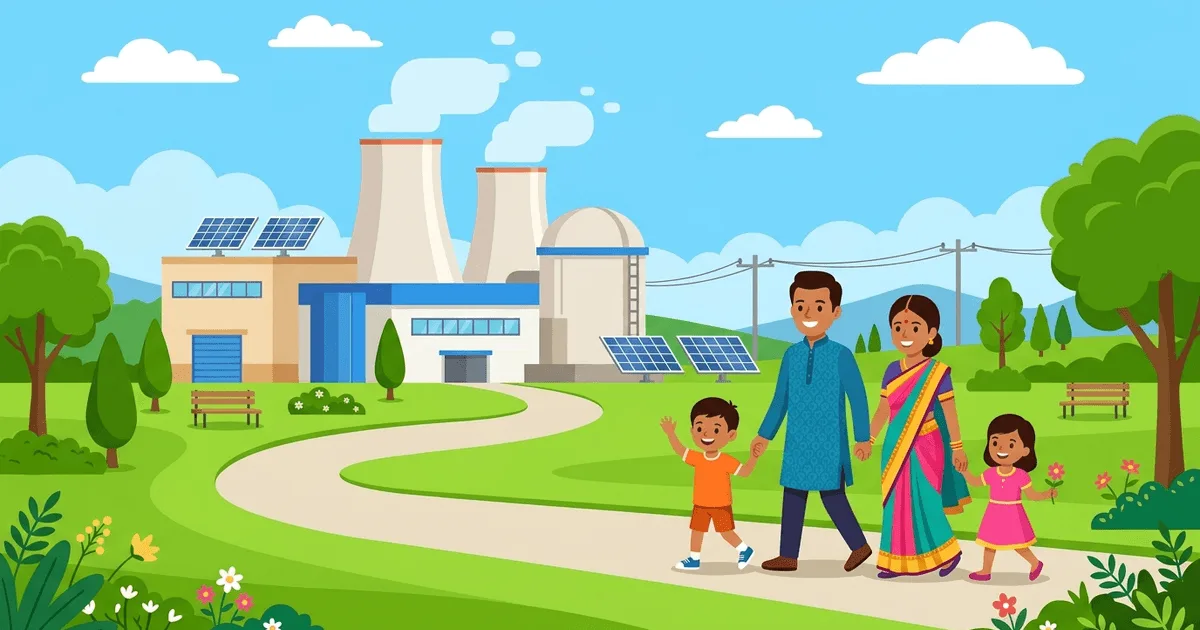
India needs large amounts of steady power each day. Electricity runs water pumps for green crops, metro trains, hospital beds, and ceiling fans. Burning dirty coal fills Indian cities with thick grey smog. Nuclear power makes steady electricity without greenhouse gas emissions 2. By replacing dirty coal, atomic power helps clear the skies over our towns. But expanding reactor power requires strict oversight so every village stays safe 1.
India took a giant step forward. In December 2025, the Parliament of India passed the landmark SHANTI Act, 2025 7. The SHANTI Act granted statutory regulatory authority to the Atomic Energy Regulatory Board 7. The law also creates a strict liability framework to hold operators responsible if problems occur. This reform mandates strict safety authorizations for incoming private and joint-venture nuclear projects 7. As an educator, I know that clear rules build lasting public trust. You can learn more on About Dr. Daya Shankar. Strong safety checks protect our shared future.
Key takeaways
- Nuclear plants make power by splitting uranium atoms without burning coal 2.
- Lifecycle data confirms nuclear fission causes far fewer deaths than coal or gas 11.
- Past accidents proved that cooling systems must always have secure backup power 1, 3.
- Deep rock repositories can isolate high-level nuclear waste safely for over 100,000 years 10.
- India passed the SHANTI Act in December 2025 to enforce statutory reactor safety oversight 7.
Words to know
- Nuclear Fission
- The splitting of an atom's core to release heat energy 2.
- Radiation
- Invisible waves or particles of energy that move through space or air 1.
- Decay Heat
- Heat produced by fuel materials even after the reactor stops 3.
- Capacity Factor
- The share of time a power plant runs at full output 2.
- AERB
- India's regulatory board that sets and enforces nuclear safety rules 7.
Frequently asked questions
Can a nuclear power plant explode like an atomic bomb?
No, a commercial power reactor cannot explode like a nuclear bomb. The fuel is made only for gentle, steady power release. Civilian plants and military weapons are run under totally different systems and safety rules 1. Strict plant safety measures work continuously to protect human life and the environment 1.
How do scientists store used nuclear waste safely?
Used nuclear fuel rests safely inside heavy steel containers and rock chambers. In December 2025, researchers showed that deep crystalline-rock repositories isolate high-level waste safely 10. The radioactive waste stays completely locked away for over 100,000 years without leaching into surrounding nature 10.
How does atomic power safety compare to coal burning?
Atomic power is much safer than coal power 2, 11. In June 2026, data showed that coal causes 24.6 deaths per terawatt-hour, while nuclear causes only 0.03 deaths 11. Building a single nuclear power plant can save 800,000 life years by averting dirty smoke from fossil fuels 2.
Does a nuclear power plant make dirty smoke or carbon gas?
No, nuclear power plants do not burn fossil fuel 2. They split heavy uranium atoms inside closed metal tanks instead. Because nothing burns to generate electricity, reactors emit no greenhouse gases 2. This helps protect our climate and keeps air clean compared to fossil power stations 2.
Sources and how this was researched
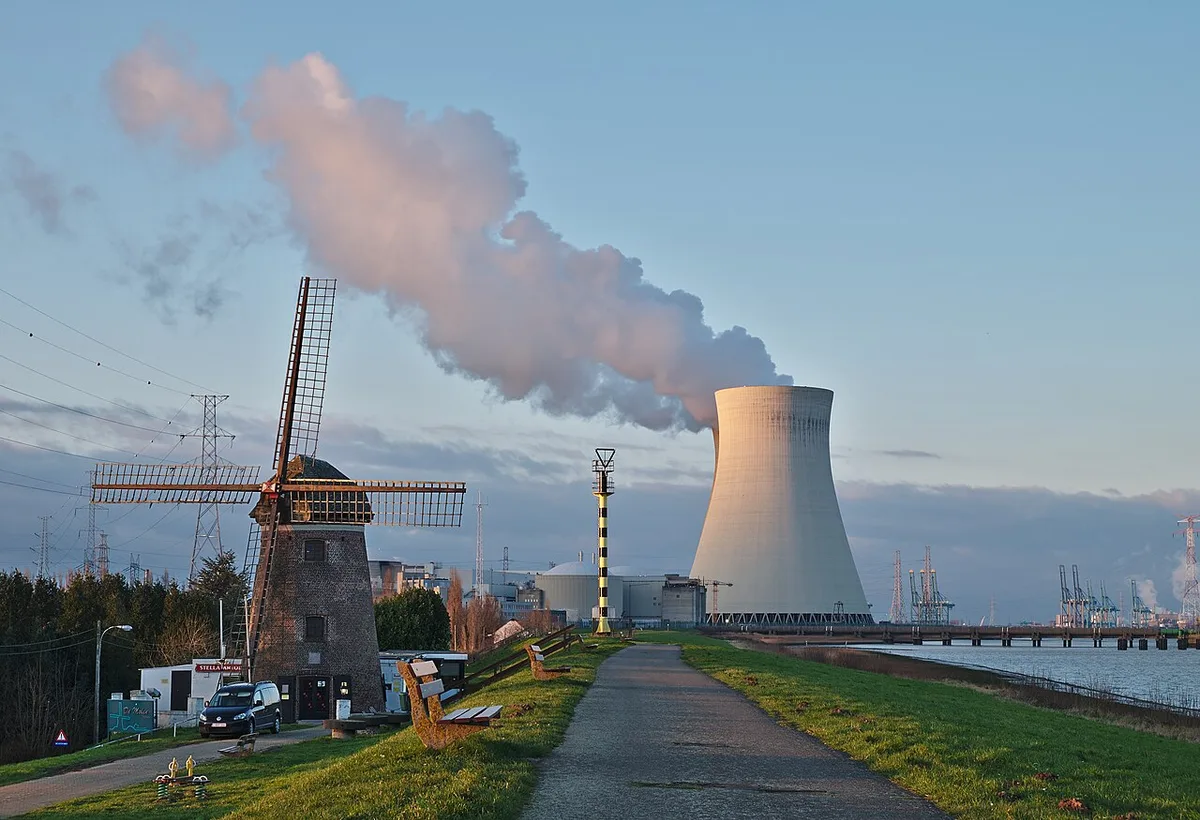
Every fact above is linked to one of these sources. Numbers in boxes (like 1) point to the list below. Photo: Trougnouf / CC BY 4.0.
- Nuclear safety and security. Wikipedia.
- Nuclear power. Wikipedia.
- Fukushima Daiichi Nuclear Power Plant. Simple English Wikipedia.
- Chernobyl Nuclear Power Plant. Wikipedia.
- Nuclear accidents in Japan. Simple English Wikipedia.
- Chernobyl Nuclear Power Plant. Simple English Wikipedia.
- December 2025 (Parliament of India):** India passed the landmark **SHANTI Act, 2025** (*Sustainable Harnessing. wikipedia.org (2026).
- December 2025 (German Federal Office for the Safety of Nuclear Waste Management - BASE):** At the SafeND resea. nuclearnatures.eu (2026).
- June 2026 (Global Energy Science / Our World in Data synthesis):** Updated peer-reviewed lifecycle mortality a. bronsgroen.be (2026).