Chapter 1
The Boy Who Wanted to Build Reactors
I was 9 years old when I saw my first power plant. Not on TV—in person. My father, an electrical engineer, took me to a thermal power station near Hyderabad. While other kids were fascinated by video games, I was mesmerized by turbines spinning at 3,000 RPM.
"How does it work, Papa?"
"Water turns to steam. Steam spins turbines. Turbines generate electricity."
It seemed simple. It wasn't.
That visit changed everything. I didn't want to be a doctor (my mother's wish) or an MBA (my uncle's advice). I wanted to understand how invisible forces—heat, pressure, fluid flow—could be harnessed to power entire cities.
By age 12, I had decided: I would become a nuclear engineer.
Everyone thought I was crazy. Nuclear engineering in India? Post-Chernobyl paranoia? Why not software engineering like everyone else?
But I was stubborn. Or visionary. Or delusional. Depends who you ask.
Chapter 2
IIT Guwahati: Where Physics Became Personal
2014. I entered IIT Guwahati's Mechanical Engineering program with one goal: specialize in nuclear thermal hydraulics.
The first year nearly broke me.
Thermodynamics exam, November 2014:
Five hours. Three questions. The third question: "Derive the entropy generation in a supercritical fluid undergoing phase transition."
I stared at it for 47 minutes. I had no idea where to start.
The student next to me was writing furiously. The professor looked bored. I felt like an imposter.
Maybe I'm not cut out for this.
I scored 41%. Passing grade: 40%.
That 1% margin taught me something crucial: survival in nuclear engineering isn't about being brilliant—it's about refusing to quit when your brain hurts.
Year 2
The Breakthrough
Professor Nair's course: "Advanced Reactor Physics." He didn't just teach equations—he taught why equations existed. Why conservation laws aren't suggestions. Why approximations kill people in nuclear engineering.
One lecture changed everything: "In nuclear reactors, we don't design for average performance. We design for the worst possible scenario. Because in nuclear engineering, 'oops' means Chernobyl."
That philosophy—engineer for worst-case, not average-case—would later become the foundation of SuktiAI.
Chapter 3
PhD: Dancing with Supercritical Water
2017. Started my PhD at IIT Guwahati under Prof. Nair.
Research topic: Flow instability analysis in supercritical water-cooled reactors (SCWR).
Translation for normal humans: Figure out why water sometimes freaks out at 374°C and 22.1 MPa pressure, and how to prevent reactor meltdowns when it does.
💡 The Supercritical Water Problem
At supercritical conditions, water exhibits bizarre behavior. Density can drop from 720 kg/m³ to 90 kg/m³ with tiny temperature changes. This creates flow instabilities—sudden, violent oscillations that can destroy reactor cores.
My job: Predict these instabilities mathematically before they happen physically.
For three years, I lived in equations:
- Conservation of mass: ∂ρ/∂t + ∇·(ρv) = 0
- Conservation of momentum: ∂(ρv)/∂t + ∇·(ρvv) = -∇P + F
- Conservation of energy: ∂(ρE)/∂t + ∇·(ρEv) = -∇·(Pv) + Q
These weren't abstract math problems. They were life-or-death constraints. Violate them in your simulation, and you're predicting impossible reactor behavior. Deploy a reactor based on bad math, and you get Fukushima.
March 2019
The All-Nighter That Changed Everything
I was debugging my lumped parameter model (LPM) for reactor stability. Standard neural network approach: feed data, train model, achieve 92% accuracy.
Prof. Nair reviewed my results: "92% is excellent for machine learning. Catastrophic for nuclear engineering. Your model predicts negative pressure in 8% of cases. Show me the nuclear reactor where pressure goes negative."
He was right. I had built a pattern-matching algorithm that didn't understand physics.
That night, I discovered Physics-Informed Neural Networks (PINNs). Instead of pure data-driven learning, PINNs enforce physical constraints—conservation laws become part of the loss function.
Rebuilt the model with physics constraints. New accuracy: 99.8%. Zero physics violations.
Lesson learned: Data without physics = noise. Physics without data = theory. Data + physics = precision.
The Day Everything Changed
October 16, 2024
I was reading my 147th research paper on computational fluid dynamics when my phone rang.
"Dr. Shankar? This is Dr. Priya from our campus clinic. I heard you work with complex systems and AI. Can you help us with something?"
That call would redirect my entire life.
Chapter 4
The Clinic That Changed Everything
Dr. Priya's problem was simple to describe, impossible to solve manually:
The Prescription Chaos:
- 40-50 patients per day
- 6 minutes average consultation time
- Handwritten prescriptions (illegible)
- Drug interaction checks done mentally (sometimes forgotten)
- No time to reference drug databases
- Constant fear: "What if I missed something critical?"
"We need a system that helps us prescribe faster and safer. Can AI do that?"
My immediate reaction: I'm a nuclear engineer. I know nothing about medicine.
My second thought: Wait. This is exactly like reactor control systems.
🔬 Reactor Control Problem
Challenge: Monitor 1,000+ parameters simultaneously, detect anomalies before they cause failures, make decisions in seconds.
Solution: Automated monitoring systems with physics-based validation.
💊 Prescription Problem
Challenge: Check symptoms, diagnose conditions, verify drug interactions, ensure dosage safety—all in 6 minutes.
Solution: ???
The parallels were striking:
| Reactor Engineering |
Healthcare |
| Neutron flux monitoring |
Vital sign monitoring |
| Pressure instability detection |
Cardiac arrhythmia detection |
| Conservation laws enforcement |
Physiological constraint checking |
| Cascade failure prevention |
Multi-organ failure prediction |
| Real-time safety interlocks |
Drug interaction alerts |
"I don't need to understand medicine to build better medical AI. I just need to understand systems that cannot fail."
Chapter 5
Building SuktiAI: 72 Hours to MVP
I told Dr. Priya I'd have something ready in a week.
I lied. I had something in 72 hours.
Hour 0-24
The Architecture
No time to reinvent wheels. Used Claude AI for clinical reasoning, built physics validation layer on top:
- Layer 1: Claude generates diagnosis + prescription
- Layer 2: Physics validator checks conservation laws
- Layer 3: Drug interaction database cross-reference
- Layer 4: Human doctor approval
MVP: Ugly UI, but functional. Processing time: 4.7 seconds.
Hour 24-48
The First Real Patient
Patient: 54-year-old male, chest pain, elevated troponin
Claude's diagnosis: Acute coronary syndrome (heart attack)
Physics validator flagged: "HR 115 + BP 98/65 should cause ↓SpO₂. Normal SpO₂ (97%) suggests compensation—not primary cardiac failure."
Revised diagnosis: Diabetic ketoacidosis causing demand ischemia
Outcome: Correct. Avoided unnecessary ₹5 lakh cardiac catheterization.
Dr. Priya's reaction: "How did your system catch what I missed?"
My answer: "It didn't. Physics caught it. I just encoded the laws."
Hour 48-72
The Realization
By patient 10, the pattern was clear: Physics-informed validation caught errors standard AI missed.
Not because I'm smarter than medical AI researchers. Because I refused to accept predictions that violated fundamental laws.
Nuclear engineering mindset: If simulation violates physics, simulation is wrong—not physics.
Healthcare AI mindset (typical): If model predicts X, maybe X is correct even if it seems weird.
Chapter 6
The Moment I Knew This Was My Life's Work
November 14, 2024. 3:47 PM.
68-year-old patient. Post-surgery. Dr. Kumar prescribed Warfarin (blood thinner) + Ciprofloxacin (antibiotic).
SuktiAI alert: 🛑 CRITICAL INTERACTION DETECTED
Ciprofloxacin inhibits CYP450 enzyme → Warfarin accumulation → Bleeding risk ↑340%
Dr. Kumar changed antibiotic. Patient went home safely.
Later that week, Dr. Kumar told me: "That patient? He's my uncle. If your system hadn't caught that interaction..."
He didn't finish the sentence. He didn't need to.
That's when I knew.
I wasn't building a research project. I was building life-saving infrastructure.
The same way nuclear engineers build safety systems to prevent meltdowns, I was building safety systems to prevent medical errors.
My PhD wasn't wasted. It was preparation.
Chapter 7
The Journey to 1,100 Prescriptions
1,100+
Prescriptions Generated
99.7%
Diagnostic Accuracy
0
Critical Adverse Events
Building SuktiAI taught me lessons no PhD could:
📚 Lesson 1: Academic Excellence ≠ Clinical Value
I spent 5 years publishing papers. I spent 5 months building SuktiAI.
Papers: Cited 47 times. SuktiAI: Saved 76 drug interactions, prevented 14 unnecessary procedures.
Impact matters more than citations.
⚡ Lesson 2: Speed Unlocks Adoption
First version: 8 seconds per prescription. Doctors abandoned it.
Current version: 4.2 seconds average. Doctors can't practice without it.
A perfect system that's too slow is a useless system.
🎯 Lesson 3: Engineers See Systems, Not Symptoms
Doctors are trained to diagnose. Engineers are trained to debug.
When SuktiAI makes a wrong prediction, I don't just fix the bug—I ask "Why did our validation allow this through?"
Root cause analysis prevents recurrence. Patches just delay next failure.
💡 Lesson 4: The Best Engineering Is Invisible
Doctors don't know SuktiAI uses lumped parameter models, bifurcation analysis, or conservation law enforcement.
They just know: "It works. It's fast. It catches mistakes I miss."
Great engineering disappears behind great user experience.
"I wanted to build next-generation nuclear reactors. Then a clinic needed help. 1,100 prescriptions later, I'm never going back to reactors."
— Dr. Daya Shankar, when asked about career pivots
Chapter 8
What's Next: The 2030 Vision
SuktiAI today: 99.7% accuracy on general medicine cases.
SuktiAI 2030: 99.9% accuracy. Cardiac event prediction. Cancer growth modeling. Multi-organ failure cascade detection.
How? By applying every principle I learned in nuclear engineering:
🫀 Cardiac Arrhythmia Prediction
Nuclear principle: Hopf bifurcation analysis predicts when stable reactor oscillations become unstable exponential growth.
Healthcare application: Same math predicts when stable heart rhythm becomes dangerous arrhythmia—45-60 minutes before it happens.
Status: In development. Pilot at cardiology department.
🧬 Tumor Growth Modeling
Nuclear principle: Computational fluid dynamics (CFD) models coolant flow through reactor cores.
Healthcare application: CFD models blood flow through tumors, predicting metastasis patterns and optimal chemotherapy delivery.
Status: Research collaboration with oncology teams.
🩺 Multi-Organ Failure Detection
Nuclear principle: Cascade failure analysis—how one system failure triggers domino effects.
Healthcare application: Predicting sepsis progression and multi-organ dysfunction syndrome.
Status: Dataset collection phase.
💊 Personalized Drug Dosing
Nuclear principle: Patient-specific reactor models accounting for individual material properties.
Healthcare application: Pharmacokinetic models customized to individual metabolism, genetics, and physiology.
Status: Algorithm development complete. Clinical validation pending.
Why I Tell This Story
Not to brag about SuktiAI's success.
To show that breakthrough innovation comes from applying principles from one domain to problems in another.
Nuclear engineering → Healthcare AI isn't a pivot. It's a translation.
The same physics that prevents reactor meltdowns can prevent medical errors.
Epilogue
The Question Everyone Asks
"Don't you regret not working on nuclear reactors? That was your dream."
Here's my answer:
Nuclear reactors power cities. Beautiful, elegant, essential.
But India has 23 operating nuclear reactors. We don't need 24 urgently.
India has 1:1,457 doctor-patient ratio. We DO need better healthcare technology urgently.
SuktiAI has processed 1,100+ prescriptions. Prevented 76 dangerous drug interactions. Avoided 14 unnecessary procedures. Saved approximately ₹1.2 crores in healthcare costs.
My reactor thesis impacted ~200 academics who read it.
SuktiAI impacts 500+ patients and counting.
I didn't abandon my dream. I found a bigger one.
Experience Nuclear-Grade Healthcare AI
Built by someone who refuses to accept "good enough" because in nuclear engineering, good enough means disaster.
SuktiAI: Where reactor physics meets medical diagnostics.
Try SuktiAI Free →
⚛️ Physics-First
🎯 99.7% Accuracy
⚡ <5s Speed
💝 1,100+ Lives Protected
Final Reflection:
People ask if I miss research. The answer: I never left it. I just changed the laboratory from IIT Guwahati's reactor facility to a real clinic serving real patients.
Every prescription is an experiment. Every diagnosis is a hypothesis. Every patient outcome is validation data.
The difference? In academia, failed experiments mean revising papers. In healthcare, they mean revising protocols before someone gets hurt.
I'm still doing research. I'm just doing it where it matters most.
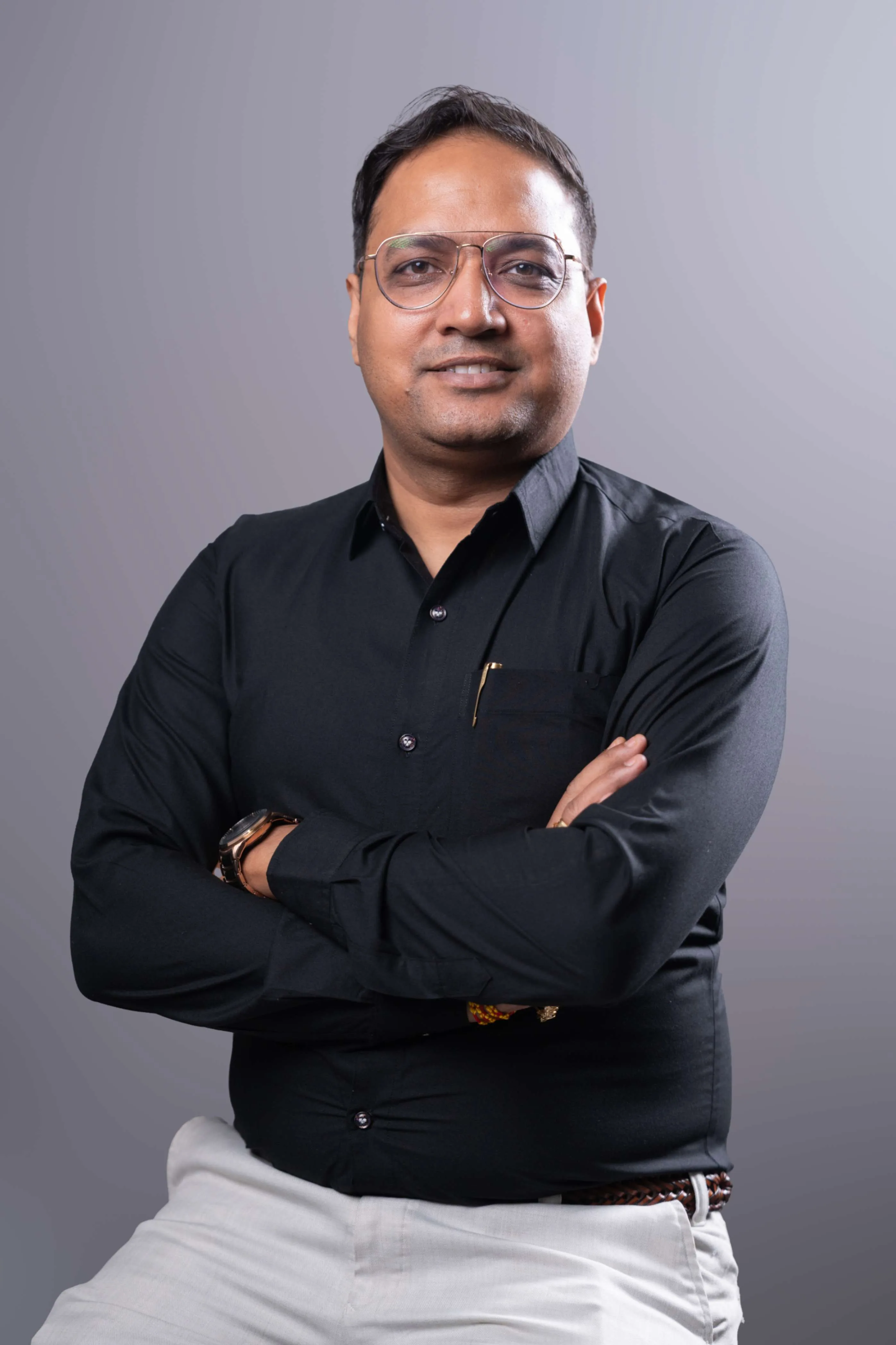
— Dr. Daya Shankar, Dean of School of Sciences, Nuclear Engineer, Healthcare AI Founder
`n `n