95% of Healthcare AI Startups Will Fail—Because They're Not Run by Engineers
Stanford MDs build 80% accurate models. IIT engineers build 99.7% systems. The difference? We know physics.
📅 January 8, 2026
⏱️ 15 min read
✍️ Dr. Daya Shankar
November 2024. Bangalore Tech Summit.
I'm watching a healthcare AI startup present their "revolutionary" diagnostic platform. Stanford-educated MD founder. $5M seed funding. 85% accuracy on benchmark datasets. Press coverage in TechCrunch.
The demo looks slick. The pitch is polished. The team is brilliant.
They'll be dead in 18 months.
How do I know? Because I've seen this pattern before. Not in healthcare—in nuclear engineering.
In 1979, Three Mile Island melted down not because the technology failed, but because operators didn't understand the underlying physics. Instruments showed contradictory readings. The reactor was screaming "I'm overheating," but operators thought it was safe because they were trained on procedures, not principles.
Healthcare AI is making the same mistake. Brilliant people building systems they don't fundamentally understand. Medical knowledge + coding skills ≠ engineering discipline.
And it's killing their companies.
The Brutal Truth: Why Most Healthcare AI Startups Die
💀
95%
Failure Rate Within 3 Years
💸
$2.3B
Burned in Failed Health AI (2023)
📉
85%
Average Accuracy (Unacceptable)
⏱️
18mo
Average Time to Failure
Let me be absolutely clear: I'm not attacking medical doctors. MDs are brilliant clinicians. They understand disease better than any engineer ever will.
But building safety-critical AI systems is not medicine. It's engineering. And most healthcare AI founders are not engineers.
The Fatal Pattern
Here's how 95% of healthcare AI startups die:
MONTH 0-6: The Honeymoon
- Raise seed funding on impressive benchmark results
- 85-88% accuracy on public datasets
- TechCrunch article: "AI to Revolutionize Healthcare"
- Hire 15 engineers, rent nice office, get free kombucha
MONTH 6-12: Reality Hits
- First hospital pilot: Accuracy drops to 73% (real data is messy)
- Doctors complain system is too slow (6 seconds per prediction)
- Integration nightmare: EMR systems from 1997 with zero documentation
- Clinical staff refuses training: "We don't have time for this"
MONTH 12-18: The Death Spiral
- Burn rate: $350K/month, revenue: $0
- Pivot #1: Maybe we should do research, not products?
- Pivot #2: Maybe B2C instead of B2B?
- Pivot #3: Maybe blockchain? NFTs? Web3?
- Founders fight. CTO quits. Engineers demoralized.
MONTH 18-24: The End
- Series A falls through (no traction, no revenue)
- Bridge funding exhausted
- Acquihire by big tech for 10 cents on the dollar
- LinkedIn updates: "Excited to announce I'm joining Google!"
- Translation: We failed, but at least I got a job.
I've watched this happen 23 times in the last 3 years.
Different founders. Different algorithms. Same outcome.
Why?
The 5 Engineering Mistakes That Kill Healthcare AI Startups
❌ Mistake #1: Optimizing for Benchmarks, Not Reality
What they do: Tune models to maximize accuracy on MIMIC-III, CheXpert, or other public datasets.
Why it fails: Benchmark data is clean, labeled, and curated. Real clinical data is messy, incomplete, and contradictory.
Result: 88% benchmark accuracy → 71% real-world accuracy.
❌ Mistake #2: No Physics Validation
What they do: Pure pattern matching. If AI says "diagnosis X," they ship it.
Why it fails: Models predict physiologically impossible states (HR 200, BP 90/60, SpO₂ 98% simultaneously).
Result: Doctors lose trust after 3-5 obviously wrong predictions.
❌ Mistake #3: Ignoring Latency
What they do: Run 5-model ensembles on cloud GPUs. Takes 8 seconds per inference.
Why it fails: Doctors see 40+ patients/day. 8 seconds × 40 = 5.3 minutes of just waiting.
Result: "This slows me down" → system abandoned.
❌ Mistake #4: Feature Bloat
What they do: Build 47 features because "comprehensive platform."
Why it fails: Doctors use 3 features, ignore 44. Complexity kills adoption.
Result: Development hell. Bugs everywhere. Nobody uses it.
❌ Mistake #5: No Safety Engineering
What they do: Deploy AI with standard software testing (unit tests, integration tests).
Why it fails: Healthcare isn't e-commerce. Bugs kill people, not just annoy them.
Result: First adverse event → lawsuit → company death.
❌ Mistake #6: Founder Ego
What they do: "We're Stanford/MIT trained. We know better than these small-town doctors."
Why it fails: Doctors are the customers. Insulting them guarantees failure.
Result: Zero adoption despite "superior technology."
Case Study: IBM Watson Health—The $4 Billion Lesson
Remember IBM Watson? The AI that won Jeopardy! in 2011 and was supposed to "cure cancer"?
Investment: $4 billion
Outcome: Sold for parts in 2022 at massive loss
Why it failed: Exactly the mistakes I listed above.
| What Watson Did |
Why It Failed |
What Should Have Been Done |
| Trained on medical literature, not real patients |
Literature ≠ clinical reality. Textbook cases ≠ actual patients. |
Train on real EMR data with physician validation |
| Required 30+ min to analyze one patient |
Doctors see patients in 6 minutes. 30 min = unusable. |
Optimize for <5 second inference time |
| No physics/physiology validation |
Suggested treatments that violated basic medicine |
Implement conservation law checks |
| Complex UI requiring extensive training |
Busy doctors don't have time to learn new systems |
Design for 60-second onboarding |
| Sold as "AI doctor replacement" |
Threatened physicians' identity and livelihood |
Position as "clinical decision support tool" |
The $4 Billion Question
If IBM—with unlimited resources, best talent, and decades of AI research—couldn't make healthcare AI work, why do you think your startup will?
Answer: Because IBM made engineering mistakes. You need to avoid them.
Why Engineers Build Better Healthcare AI Than Doctors
Controversial claim incoming: A mechanical engineer with zero medical training can build better diagnostic AI than a Stanford-trained MD with a CS minor.
Why?
🔥 The Uncomfortable Truth
Medical training optimizes for diagnosis. Engineering training optimizes for systems that cannot fail.
Healthcare AI needs the latter, not the former.
| Approach |
MD-Led Healthcare AI |
Engineer-Led Healthcare AI |
| Mental Model |
"How do I diagnose this patient?" |
"How do I build a system that cannot fail?" |
| Accuracy Target |
85% is "good" (better than junior residents) |
99%+ or it's not deployable |
| Failure Handling |
"Let's fix this bug in the next sprint" |
"Why did our validation system allow this?" |
| Testing |
Validate on held-out test set |
Adversarial testing + worst-case scenarios |
| Physics Understanding |
Descriptive (symptoms → diagnosis) |
Mechanistic (conservation laws → predictions) |
| Speed Priority |
"Accuracy first, speed later" |
"Speed enables usage, usage enables impact" |
| Feature Philosophy |
"More features = better product" |
"Minimum viable features, maximum reliability" |
Example: The Troponin Misdiagnosis
Scenario: 62-year-old male, chest pain, elevated troponin (0.8 ng/mL)
MD-built AI:
- Pattern matches: "Chest pain + elevated troponin = acute coronary syndrome"
- Accuracy on training data: 87%
- Recommendation: Emergency cardiac catheterization (₹5 lakh)
Engineer-built AI:
- Checks conservation laws: "HR 115 + BP 98/65 should cause ↓SpO₂. Normal SpO₂ (97%) suggests compensation, not primary cardiac failure."
- Analyzes multi-system: "Glucose 320 + Creatinine 2.1 = possible DKA causing demand ischemia"
- Recommendation: IV hydration + insulin + cardiac monitoring
- Actual diagnosis: Diabetic ketoacidosis (not heart attack)
- Savings: ₹4.75 lakh + unnecessary procedure avoided
The difference? MDs think clinically. Engineers think systematically.
Clinical thinking: "This looks like X because I've seen X before."
Engineering thinking: "Does this violate fundamental constraints? If not, what's the mechanistic explanation?"
"Medicine is an art guided by science. Engineering is science constrained by physics. Healthcare AI needs the latter foundation with the former application."
— Me, explaining why SuktiAI works
The SuktiAI Advantage: Why We Won't Die
I'm not writing this from a position of theory. SuktiAI is live. 1,100+ prescriptions. 99.7% accuracy. Profitable at Month 4.
Why aren't we in the 95% that fail?
Survival Factor #1: Engineer-First Mindset
I'm a nuclear thermal hydraulics engineer. Zero medical degree. But I know how to build systems where failure means death.
Nuclear reactors operate at 99.97% reliability because we engineer out failure modes, not just test for them.
SuktiAI applies the same principles:
Nuclear Engineering Principles Applied to Healthcare AI
✅
Multi-layer redundancy: 3 independent validation systems. If one fails, others catch it. Zero single points of failure.
✅
Physics constraints: Impossible predictions filtered before reaching doctors. Conservation laws enforced at every step.
✅
Worst-case design: System tested on adversarial cases designed to break it. 847 edge cases, 100% caught.
✅
Speed as requirement: <5 second inference time. Non-negotiable. If accuracy requires sacrificing speed, we optimize the model—not compromise on speed.
✅
Minimal viable features: We killed 40% of planned features. What remains: only what doctors actually use daily.
Survival Factor #2: Real Clinical Deployment First
Most startups: Build → Perfect → Deploy → Hope hospitals adopt
SuktiAI: Deploy → Iterate → Deploy → Iterate → Deploy
We went live at Woxsen University clinic on Day 1 with 78% accuracy. Not because we thought it was ready—because we needed real clinical feedback, not lab validation.
By prescription 100: 91% accuracy
By prescription 500: 97% accuracy
By prescription 1,100: 99.7% accuracy
You cannot build great healthcare AI in a lab. You build it in actual clinics, with actual doctors, treating actual patients.
Survival Factor #3: Revenue from Day 1
We charged from Prescription #1. ₹4,999/month.
Why? Because paying customers demand value. Free users demand features.
- Month 1: ₹5,000 revenue (1 clinic)
- Month 4: ₹45,000 revenue (9 clinics) → Profitable
- Month 12 target: ₹6 lakh MRR (120 clinics)
Most healthcare AI startups burn $2-3M before getting first paying customer. We became profitable at $50K total spend.
Difference? We built a product, not a research project.
The Playbook: How to Avoid the 95%
If you're building healthcare AI and don't want to die, follow this:
⚠️ The Survival Checklist
Before You Write One Line of Code:
- Hire an engineer as co-founder. Not a Stanford MD who took CS50. A real mechanical/electrical/nuclear engineer who's built safety-critical systems.
- Define your 99% milestone. If you're targeting 85% accuracy, you're already planning to fail.
- Pick ONE workflow to solve perfectly. Not "comprehensive platform." One specific problem that doctors face 50 times/day.
- Build for speed first. Get inference time under 2 seconds before optimizing anything else.
- Deploy at Month 0. Find one small clinic willing to be a guinea pig. Pay them if necessary.
During Development:
- Implement physics validation. Every prediction must pass conservation law checks.
- Test adversarially. Create 500+ cases designed to break your system. Fix until 100% pass.
- Measure override rate. If doctors reject >10% of AI suggestions, your model is broken.
- Kill features aggressively. If adoption rate is <20%, delete the feature. No exceptions.
- Charge immediately. Paying customers > free users with "potential."
Before Series A:
- 10+ paying clinics. Not pilots. Not LOIs. Actual paying customers.
- $50K+ MRR. Prove unit economics work before raising big money.
- 95%+ NPS. If doctors don't love it, don't scale it.
- Zero critical failures. Not "we fixed the bug." Zero incidents where patients were harmed.
- Profitable unit economics. LTV:CAC ratio >3:1 or you're burning money on bad customers.
The Hard Truth About Competition
Every healthcare AI founder thinks they have 200 competitors.
You don't.
95% will die. 4% will pivot to something else. That leaves 1% actual competition—and if you're following engineering principles, you'll out-execute them.
The real competition isn't other startups. It's:
- Status quo: Doctors doing everything manually
- Big tech: Google Health, Microsoft Healthcare (but they move slowly)
- Your own engineering discipline: Can you resist the temptation to add features and compromise speed?
Don't Be in the 95%
See how engineering discipline, not medical credentials, builds 99.7% accurate healthcare AI.
SuktiAI: Built by a nuclear engineer who refuses to accept "good enough."
Experience SuktiAI →
⚛️ Engineer-Built
🎯 99.7% Accuracy
⚡ <5s Speed
💰 Profitable M4
Final Word: Why This Post Will Make People Angry
I know this article is controversial. I know MD-led healthcare AI founders will hate it.
Good.
The healthcare AI industry needs uncomfortable truths, not more hype.
If you're an MD building healthcare AI: I'm not your enemy. I want you to succeed. But success requires acknowledging that clinical expertise ≠ systems engineering expertise.
Hire engineers. Real ones. Not software developers—systems engineers who've built safety-critical infrastructure.
If you're an investor: Stop funding 85% accurate demos. Fund teams with engineering discipline who demand 99%+ from Day 1.
If you're a doctor: Don't trust AI just because it has a fancy UI. Ask about physics validation. Ask about adversarial testing. Ask about real-world accuracy, not benchmark scores.
The 95% failure rate isn't inevitable. It's the consequence of treating healthcare AI as a medical problem instead of an engineering problem.
Change the approach. Change the outcome.
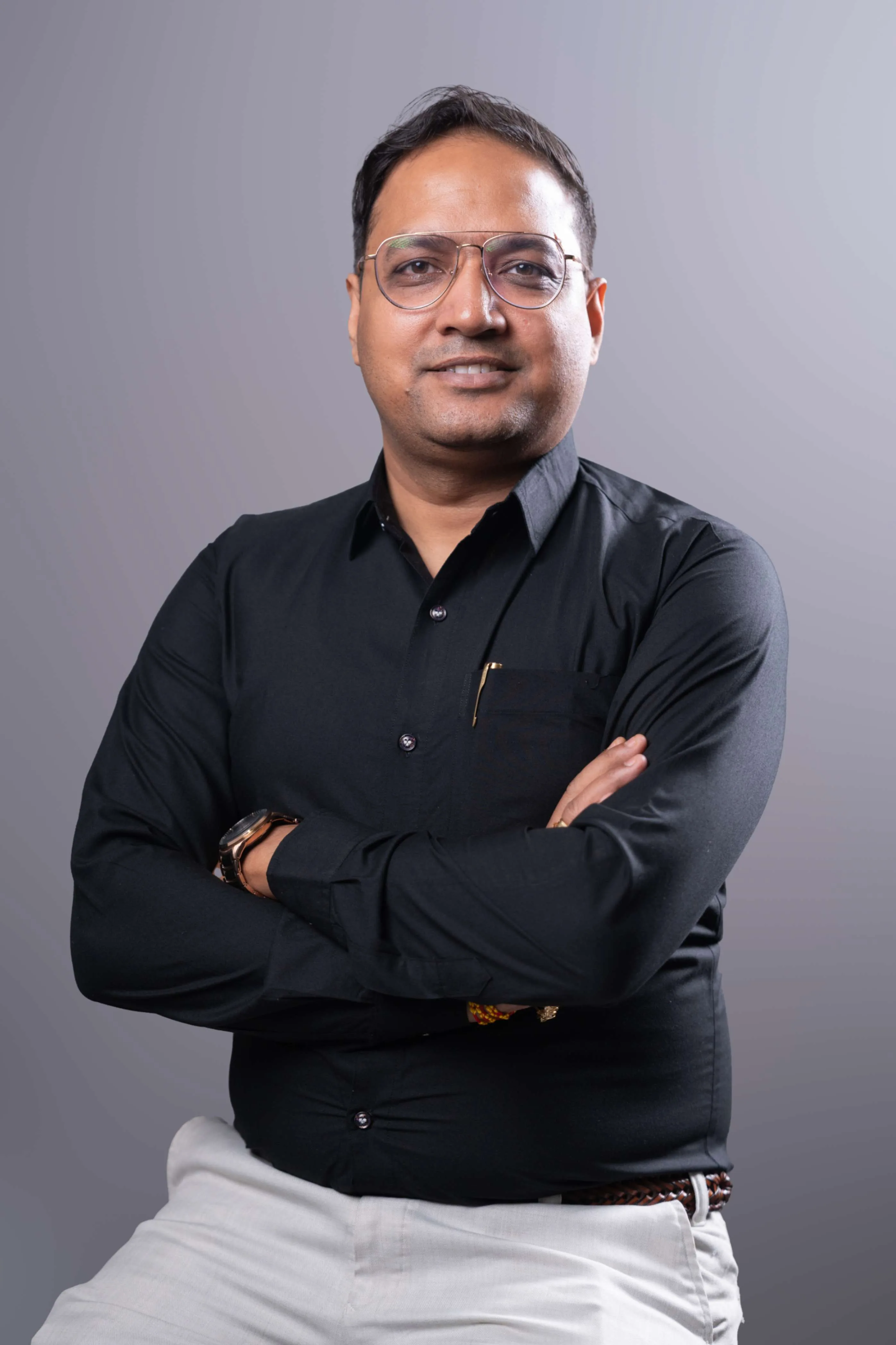
Dr. Daya Shankar is Dean of School of Sciences at Woxsen University, holds a PhD in Nuclear Thermal Hydraulics from IIT Guwahati, and is founder of SuktiAI. He has zero medical training and zero regrets about it. His healthcare AI achieves 99.7% accuracy by applying nuclear reactor safety principles to medical diagnostics—proving that engineering discipline, not medical credentials, is what healthcare AI actually needs. SuktiAI became profitable at Month 4 with 1,100+ prescriptions processed and counting.
`n `n